
Best Bandages for Seniors With Fragile Skin
Caring for thin or fragile senior skin can feel tricky. You want a bandage that stays in place, but you also want something gentle enough to remove without tearing or bruising the skin.
I’ve worked with many older adults who struggle with this. Their skin may tear from everyday bumps, and traditional adhesive bandages often make things worse. So today, let’s walk through the types of bandages that tend to work better, what materials to avoid, and how you can make any bandage safer and more comfortable for a senior.
This guide is written for you and me—caregivers, family members, and seniors who want clear, simple, reassuring information.
Why Senior Skin Needs Special Care
As we age, skin becomes thinner and more delicate. The top protective layer loses collagen. The skin holds less moisture. Blood vessels sit closer to the surface. Even a small tug from a strong adhesive can cause a tear.
This makes traditional bandages a poor fit for many older adults. The wrong adhesive can create more harm than the original cut or scrape. So choosing the right type makes a big difference for both comfort and healing.
Best Bandage Types For Thin or Fragile Senior Skin
Below are the bandage styles that usually perform the best on delicate skin. Each one solves a different problem, so I’ll explain when to use them.
1. Silicone Adhesive Bandages (Most Gentle and Reliable)
If you ask me which bandage works best overall for seniors, silicone adhesive bandages win every time.
Silicone sticks securely but lifts off the skin smoothly. It doesn’t pull the surface layer of the skin the way traditional adhesives do. These bandages are often used in hospitals for wound care on fragile skin.
Why they work well:
- They stay on even through light moisture.
- They peel off without causing skin tears.
- They don’t leave painful residue.
- They can be repositioned without losing stickiness.
Silicone dressings are especially good for people taking blood thinners or steroids, where bruising risk is higher.
Research also supports silicone’s benefits in wound care and skin protection, particularly for reducing irritation (see study on silicone adhesives for medical tapes, published in Journal of Wound Care). Study link: Silicone adhesives reduce skin trauma in wound applications.
2. Hydrocolloid Bandages (For Wounds That Need Moist Healing)
Hydrocolloid dressings don’t rely on aggressive adhesives. Instead, they form a cushioned, moist barrier that helps wounds heal faster.
They’re great for:
- blisters
- shallow pressure sores
- minor skin tears
- moisture-related wounds
Hydrocolloids stick gently but effectively, and they stay on for days without irritating the skin. They are not ideal for heavily draining wounds, though.
One clinical review found that hydrocolloids improve moist wound healing and reduce pain during dressing changes. Study link: Hydrocolloid dressings promote improved healing outcomes.
3. Soft Fabric Bandages With Low-Tack Adhesive
These are the next step down from silicone bandages. They are more flexible than plastic bandages, and they move well with the skin. They’re good for joints, fingers, and areas that bend or stretch.
Look for labels such as:
- “sensitive skin”
- “low-tack adhesive”
- “soft cloth”
- “hypoallergenic”
Avoid stiff plastic bandages. Those tend to peel at the edges and tug on the skin.
4. Self-Adherent Wraps (For Wrapping Without Adhesive)
Sometimes the best solution is to skip adhesive altogether.
Self-adherent wraps (often called “cohesive wraps”) stick to themselves, not to the skin. They’re perfect for seniors who cannot tolerate adhesive on certain parts of their body.
Use these when:
- the skin has already been irritated by a previous bandage
- the wound is on a leg or arm
- you need a gentle but secure hold
- you’re covering gauze rather than sticking something directly to the skin
They are also easy to remove—just unwind them.
5. Paper Tape With Non-Adhesive Pads
If you prefer to make your own dressing, choose paper tape. It’s the least damaging medical tape for thin skin.
You can place a sterile non-adhesive pad over the wound and secure the edges with paper tape. This approach gives you flexibility and is very gentle.
Bandage Types to Avoid for Seniors
Some bandages may stick too aggressively or cause discomfort. These are the ones I generally recommend skipping for seniors with delicate skin:
1. Traditional Plastic Adhesive Bandages
They often stick too tightly and peel off in a jerky way that can tear thin skin.
2. Waterproof Bandages With Strong Adhesives
These are designed to stay on during swimming or showering. That level of stickiness is not ideal for fragile skin.
3. Duct Tape–Style or Sports Tape Dressings
You may see these used for athletes or high-friction situations. They are far too strong for senior skin.
Tips To Help Any Bandage Stick Better (Without Hurting the Skin)
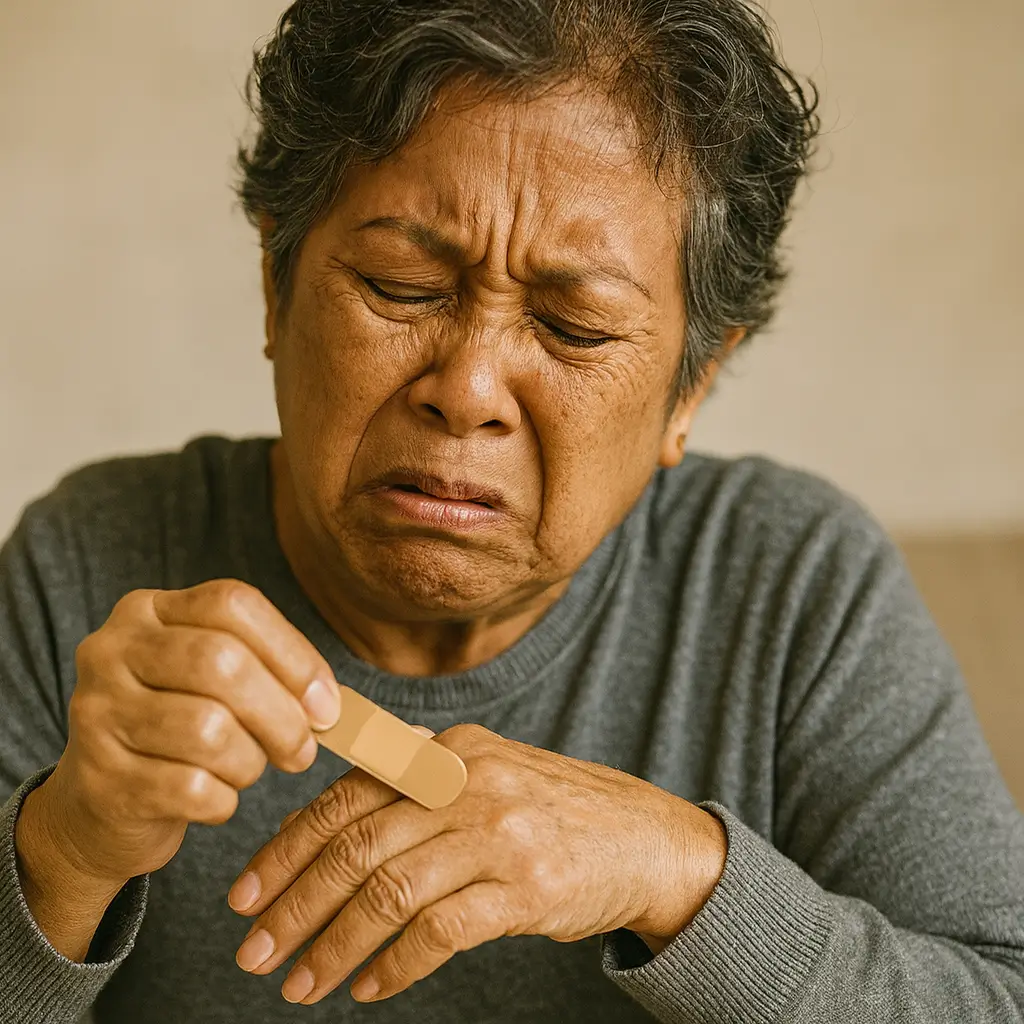
Even gentle bandages can lift off too soon if the skin isn’t prepared correctly. Here’s how to help them stay secure while still protecting fragile skin.
1. Clean and Dry the Skin Well
Moisture, lotion, or natural oils make adhesives slip. Pat the area dry before applying anything.
2. Clip, Don’t Shave
If hair is in the way, gently trim it. Shaving can cause micro-cuts.
3. Warm the Bandage With Your Hands
A few seconds of warmth helps silicone and low-tack adhesives stick better.
4. Press Lightly Around the Edges
You don’t need much pressure—just enough to help the bandage settle.
5. Remove the Bandage Slowly
Pull it back low and gently, not straight up.
6. Use Skin Prep Barriers if Needed
Some caregivers use protective barrier wipes to guard the skin from adhesive. They can help reduce friction when removing the bandage.
Special Situations To Think About
Every senior’s skin is different. Some conditions make skin even more delicate, so it helps to adjust the bandage type.
1. Seniors on Blood Thinners
Bruising can happen easily. Silicone dressings are the safest choice.
2. Seniors With Diabetes
Wounds may heal more slowly. Hydrocolloids help maintain a healing environment, but consult a clinician for anything deeper than a superficial cut.
3. Seniors With Dementia
They may pick at a bandage. Soft fabric options or self-adherent wraps can be harder to pull off.
4. Seniors With Allergies
Choose hypoallergenic and latex-free options. Silicone is usually the most skin-friendly.
How To Choose the Right Bandage for the Right Job
Here is a simple guide to make decisions easier:
| Situation | Best Option | Why |
|---|---|---|
| Thin, fragile skin in general | Silicone bandage | Gentle to remove, sticks well |
| Wounds that need moist healing | Hydrocolloid dressing | Cushions and protects longer |
| Areas that bend or stretch | Soft fabric low-tack bandage | Flexible and comfortable |
| Skin tears | Silicone or hydrocolloid | Reduces trauma during change |
| When adhesive is not tolerated | Self-adherent wrap with gauze | No sticky surface touching skin |
| Everyday small scrapes | Sensitive-skin bandage | Less irritation than plastic |
How To Remove A Bandage Without Causing Damage
This step matters just as much as choosing the right bandage.
Here’s the safest approach:
- Loosen one corner gently.
- Support the skin by placing a hand next to the bandage.
- Pull the bandage back slowly, keeping it low to the skin.
- Stop if the skin looks like it’s stretching or lifting.
- Use warm water or a medical adhesive remover if it’s stuck firmly.
Taking the extra few seconds can prevent painful tears.
Common Questions I Hear From Caregivers
Will silicone bandages fall off too easily?
Not usually. They’re designed to stay on while still being gentle. If a silicone bandage isn’t sticking, the skin may be too moist—clean and dry it again.
Are hydrocolloid bandages safe for seniors?
Yes, but only for shallow, clean wounds. They should not be used for infected wounds or heavily draining ones.
Should I cover every small cut?
For seniors with fragile skin, covering small wounds is often safer because it protects against friction and bacteria. But once the wound closes, leave it open to air.
My Honest Advice
If you’re caring for someone with thin or fragile skin, your safest all-around choice is a silicone adhesive bandage. It offers the best balance of sticking power and gentleness.
Hydrocolloids are excellent for specific wound types, but they’re not for every situation.
Avoid anything labeled “strong adhesive” or “waterproof.” These can do more harm than good.
The goal is always the same: protect the wound without damaging the surrounding skin. A gentle, low-tack bandage helps healing happen with less discomfort, less fear, and far fewer complications.
If the wound is deep, not healing, or looks infected, always reach out to a clinician. The right care early on prevents bigger issues later.
