
10 Best Free Dementia Resources for Caregivers
When someone receives a dementia diagnosis, one of the first worries is often the cost of care. Medical appointments, medications, home safety products, and caregiving expenses can add up quickly. It is easy to assume that getting help always means spending more money.
The good news is that this is not always true.
Many organizations across the United States offer free services, educational materials, support groups, activity resources, and caregiver programs designed specifically for people living with dementia and the family members who care for them. Some of these resources are available nationwide, while others connect you with local services in your community.
I have noticed that many families simply do not know these programs exist. As a result, they miss out on valuable support that could make daily life easier and less stressful.
In this guide, I’ll walk you through some of the best free resources available today. Whether you are living with early-stage dementia, caring for a spouse, parent, or another loved one, these programs can provide practical help without adding to your expenses.
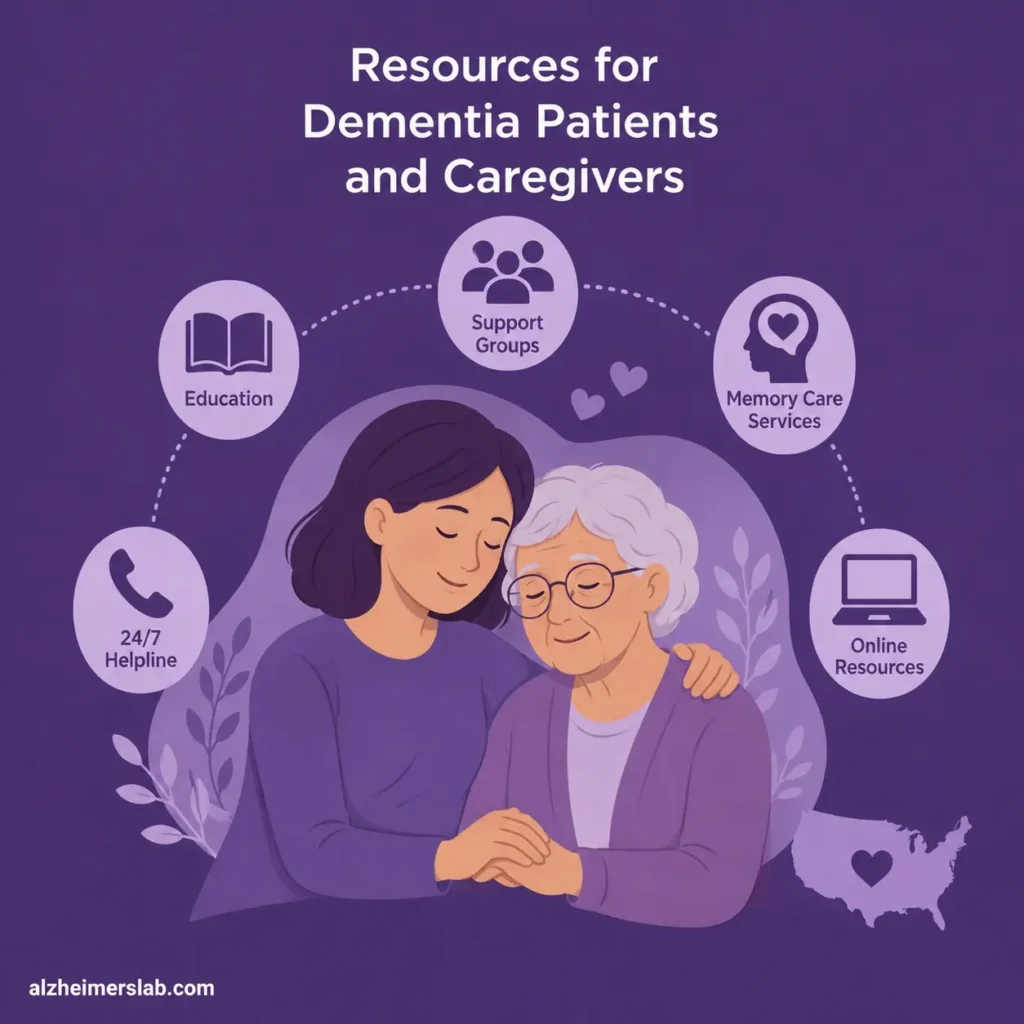
1. Alzheimer’s Association 24/7 Helpline
If you only remember one resource from this list, make it the Alzheimer’s Association’s free 24/7 Helpline.
Receiving a dementia diagnosis often leads to dozens of questions. You may wonder what symptoms are normal, how to handle difficult behaviors, what to expect in the future, or where to find local services. Having someone knowledgeable to speak with can make a difficult situation feel much more manageable.
The helpline is available around the clock, every day of the year. Trained specialists answer calls from people living with dementia, caregivers, family members, and even friends who simply want reliable information.
You can call if:
- You have just received a diagnosis.
- You need help understanding dementia symptoms.
- A loved one has become aggressive or confused.
- You need advice about caregiving.
- You want help finding local resources.
- You simply need emotional support.
One of the biggest advantages is that you are talking to someone who understands dementia. Even if they cannot solve every problem, they can point you in the right direction and connect you with services near your home.
For many caregivers, this helpline becomes one of the most valuable free resources they ever use.
2. Free Dementia Apps That Can Make Daily Life Easier
Technology cannot stop dementia, but the right app can make everyday routines much easier.
The Alzheimer’s Association offers My ALZ Journey®, a free app that provides personalized education, practical guidance, and recommendations based on your situation. It is designed for both people living with dementia and their care partners.
Beyond that, several free apps can help with common challenges such as:
- Medication reminders
- Appointment tracking
- Daily routines
- Memory prompts
- Simple brain activities
- Mood tracking
- Calendar reminders
These tools are particularly helpful during the early stages of dementia when many people are still able to use smartphones or tablets with minimal assistance.
As a caregiver, I also find these apps useful because they help reduce the number of things you have to remember yourself. Instead of constantly reminding someone about appointments or medications, the app can provide gentle prompts throughout the day.
While no app replaces medical care, many families find that these free digital tools help create more structure and independence.
3. Free Dementia Education and Online Learning
Understanding dementia is one of the most important things you can do after a diagnosis.
Many people believe dementia only causes memory loss, but it also affects communication, judgment, emotions, behavior, sleep, and the ability to perform everyday tasks. Learning why these changes happen helps you respond with more patience and confidence.
Fortunately, you do not need to pay for expensive courses.
The Alzheimer’s Association regularly offers free educational webinars, virtual classes, and ALZ Talks covering topics such as:
- Understanding different types of dementia
- Managing challenging behaviors
- Communication techniques
- Home safety
- Legal and financial planning
- Caregiver stress
- Future care planning
Many sessions are available online, allowing you to learn at your own pace from home.
Even if you have been caregiving for several years, new research and care strategies continue to emerge. Spending a little time learning can often prevent frustration and improve quality of life for both you and your loved one.
4. Free Dementia Caregiver Support Groups
Caring for someone with dementia can feel incredibly isolating.
Friends and relatives may not fully understand what you are going through, especially when behaviors become unpredictable or emotionally exhausting.
This is where support groups become valuable.
The Alzheimer’s Association offers ALZConnected®, a free online community where caregivers and people living with early-stage dementia can ask questions, share experiences, and learn from others facing similar situations.
Many local Alzheimer’s Association chapters also organize free support groups, both in person and virtually.
These meetings provide a safe space where you can discuss challenges such as:
- Managing wandering
- Sleep problems
- Sundowning
- Caregiver burnout
- Family disagreements
- Emotional stress
Sometimes the biggest benefit is simply realizing you are not alone.
Many caregivers leave support meetings with practical tips they can begin using immediately at home.
5. Free Community Resource Finder
Finding local dementia services can be surprisingly difficult.
You might know that help exists, but not know where to begin searching.
The Community Resource Finder, created by the Alzheimer’s Association and AARP, makes this process much easier.
By entering your ZIP code, you can search for nearby services including:
- Support groups
- Memory care resources
- Adult day programs
- Transportation services
- Legal assistance
- Caregiver support
- Meal programs
- Respite care
Not every service listed is completely free, but many are free or subsidized through nonprofit organizations or government programs.
Instead of spending hours searching online, you can quickly see what resources are available in your own community.
This tool is especially helpful if you are caring for someone in a different city or helping an aging parent from another state.
6. Free Dementia Care Guides and Printable Resources
One of the simplest free resources available is also one of the most useful.
The Alzheimer’s Association provides dozens of downloadable guides covering nearly every aspect of dementia care.
These printable PDFs explain topics such as:
- Understanding dementia
- Communication techniques
- Managing difficult behaviors
- Personal care assistance
- Home safety
- Wandering prevention
- Nutrition
- Caregiver well-being
- Planning for later stages
Unlike random advice you may find online, these guides are written using evidence-based information in language that is easy to understand.
I recommend printing the guides that are most relevant to your situation. Keeping them in a binder at home makes it easier to review important information whenever new challenges arise.
They can also be shared with family members who want to better understand what your loved one is experiencing.
7. Free Dementia Activities and Printable Games
Keeping the brain engaged is important, even after a dementia diagnosis.
Activities will not cure dementia, but they can reduce boredom, improve mood, encourage conversation, and provide meaningful moments throughout the day.
Many organizations now offer free dementia-friendly activities that you can download and print at home.
These include:
- Word searches
- Picture matching games
- Coloring pages
- Simple puzzles
- Conversation starters
- Reminiscence activities
- Music ideas
- Seasonal crafts
- Memory exercises
The key is choosing activities that match the person’s abilities rather than their age.
Someone living with dementia should never feel like they are taking a test or being judged. The goal is enjoyment, not perfect performance.
Simple activities often work better than complicated ones because they reduce frustration while encouraging participation.
Even spending thirty minutes together doing an enjoyable activity can improve the day for both the caregiver and the person living with dementia.
8. Trusted Educational Websites That Cost Nothing
The internet contains an enormous amount of information about dementia.
Unfortunately, not all of it is accurate.
Many websites publish outdated information or make unrealistic claims about miracle treatments.
Instead, stick with trusted organizations that regularly update their content based on current research.
Some of the best free educational websites include:
- Alzheimer’s Association
- National Institute on Aging
- Mayo Clinic
- WebMD
- HelpGuide
- AgingCare
These websites explain topics such as:
- Dementia symptoms
- Different dementia types
- Diagnosis
- Treatment options
- Caregiving strategies
- Safety tips
- Nutrition
- Sleep problems
- Communication
- Research updates
When searching online, always consider who published the information and whether medical experts reviewed it.
Reliable information helps you make better decisions while avoiding misinformation that could waste time or create unnecessary worry.
9. Free Programs Through Your Local Area Agency on Aging
Many families are surprised to learn that every state has an Area Agency on Aging that connects older adults with community services.
These agencies often provide free guidance for families affected by dementia.
Depending on where you live, you may find services such as:
- Caregiver education
- Care planning
- Benefits counseling
- Transportation assistance
- Meal programs
- Respite care referrals
- Home support services
- Dementia education
- Local support groups
Availability varies by location, but many programs receive government funding that allows them to offer services at little or no cost.
If you are unsure where to start, your local Area Agency on Aging can often point you toward other community organizations that specialize in dementia care.
It is one phone call that could save you hours of research.
10. Libraries, Senior Centers, and Local Community Programs
Not every helpful resource comes from a healthcare organization.
Public libraries, senior centers, community organizations, and faith-based groups often provide valuable services that people overlook.
Many libraries now offer:
- Large-print books
- Audiobooks
- Music collections
- Memory cafés
- Social events
- Technology assistance
Senior centers frequently organize:
- Art classes
- Gentle exercise
- Music programs
- Social gatherings
- Craft sessions
- Educational talks
Some nonprofit organizations and local Alzheimer’s groups also distribute free activity kits, sensory items, simple puzzles, fidget products, or comfort items for people living with dementia.
Availability depends on your community, so it is worth contacting local organizations to ask what they currently offer.
Even participating in one regular activity each week can reduce loneliness and help maintain social connections.
Tips for Getting the Most From Free Dementia Resources
Simply knowing these resources exist is only the first step.
To make the most of them:
- Reach out early rather than waiting until caregiving becomes overwhelming.
- Save important phone numbers and websites in one place.
- Join at least one caregiver support group.
- Check local programs every few months because new services are often added.
- Ask your doctor, hospital social worker, or memory clinic about additional free programs available in your area.
- Don’t hesitate to ask questions. Many organizations exist specifically to help families navigate dementia.
The earlier you build your support network, the easier it becomes to manage new challenges as dementia progresses.
Final Thoughts
Living with dementia can be expensive, but not every form of support comes with a price tag.
Across the United States, there are many excellent free resources that provide education, emotional support, practical guidance, activities, and connections to local services. While these programs cannot change the diagnosis, they can make everyday life less stressful and help both you and your loved one feel better supported.
I encourage you to explore at least one or two of the resources mentioned above today. Even a single phone call, downloadable guide, or local support group could make a meaningful difference in your caregiving journey.
Remember, you do not have to figure everything out on your own.
Research:
- Alzheimer’s Association. “Help and Support Resources.”
- National Institute on Aging. “Alzheimer’s Caregiving.”
