

5 Best Busy Boxes for Dementia Patients
alzheimerslab.com is reader-supported. I may earn a commission when you purchase via links on this page
Looking for ways to keep your loved one with dementia engaged and mentally stimulated?
It can be challenging to find activities that are both enjoyable and appropriate for their cognitive abilities. That’s where busy boxes come in. These simple, yet effective tools can provide hours of entertainment and cognitive stimulation. Let me share with you the best busy boxes for dementia patients. I will also tell you how they can make a positive impact on their quality of life.
Here Are The Best Busy Boxes For People Living With Dementia
1. PHIELEY Fidget Sensory Busy Board
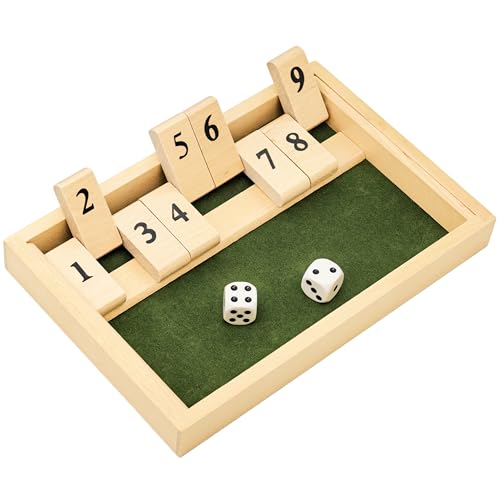
PHIELEY Fidget Sensory Busy Board is a simple, hands-on activity designed to keep seniors with dementia mentally engaged and calm. Made from solid wood, this memory match board feels sturdy and reassuring in the hands. Inside, soft green felt reduces noise, which helps avoid unnecessary sensory stress.
The numbered tiles and dice gently encourage basic math thinking, memory recall, and logical decision-making. At the same time, flipping tiles supports fine motor skills and hand-eye coordination. The board size is manageable, so it fits well on a table, tray, or bedside surface.
It can be used alone or with others, allowing 2–4 players to join in. This makes it useful for quiet personal time or small group activities in a nursing home or at home. Overall, it offers mental stimulation without being overwhelming.
This board suits seniors with early to moderate dementia who enjoy fidgeting, simple number games, or quiet tabletop activities. It works well for those who need gentle cognitive stimulation, reduced noise, and an easy-to-understand game structure.
Pros
- Solid wood build
- Quiet design
- Supports cognition and fine motor skills
Cons
- Limited challenge for seniors in advanced stages of dementia
2. Woodtoe Montessori Lock and Key Toy Set
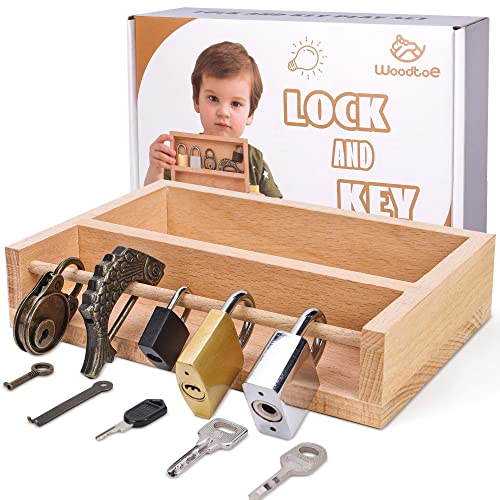
The Woodtoe Montessori Lock and Key Toy Set is a well-designed, high-quality wooden tray base that provides a simulated locking and unlocking scene for dementia patients.
The tray has enough space to accommodate locks and keys, and it comes with 5 different locks and matching keys, each in a different style, such as bear locks, fish locks, black locks, bronze locks, and silver locks.
The set includes 1 wooden tray base, 5 featured locks and keys, 1 instruction manual, and exquisite packaging. The wooden tray base is made of high-quality natural wood, which is safe and well-polished. The wooden tray box is made of natural beech wood, making it sturdy and well-polished.
The Woodtoe Montessori Lock and Key Toy Set is great for seniors with dementia who enjoy playing or fidgeting with keys. It keeps them active and busy, and the binding mechanism prevents them from swallowing the keys.
It is important to note that this product is made for children, but it is suitable for seniors with cognitive decline. The abundant locks and keys provide sensory stimulation and help improve hand-eye coordination.
Overall, the Woodtoe Montessori Lock and Key Toy Set is a great option for those looking for a fun and safe way to keep dementia patients active and engaged. The well-designed and high-quality wooden tray base, along with the different locks and keys, make it a valuable addition to any busy box collection.
Pros
- Abundant variety of locks and keys
- Keeps seniors with dementia active and busy
- Safe binding mechanism prevents swallowing of keys
Cons
- Limited activities and may not hold attention for extended periods
- May be too simplistic for advanced stages of dementia
3. Panda Brothers Montessori Screwdriver Board Set

The Panda Brothers Montessori Screwdriver Board Set is a unique and engaging product for dementia patients. With its 7 different insert screws, it allows seniors to practice the action of removing and reinserting, while also improving their recognition ability and sensory activity.
This product is not only beneficial for their cognitive function but also provides them with a fun and stimulating activity.
Moreover, it is crafted from environmentally friendly, natural wood, making it a smart and long-lasting investment. The solid construction also ensures that it can withstand frequent use without breaking down easily.
The Montessori Screwdriver Board is a perfect way to keep dementia patients busy and focused. It offers a variety of creative challenges that can keep seniors occupied for hours, while also promoting natural learning activities. This product is designed to turn their boring time at home into a fun and engaging one.
It’s worth noting that this product is marketed toward children, but it is also suitable for seniors with cognitive decline. The size and shape of the screws are perfect for seniors with limited dexterity or hand tremors, making it easy for them to grasp and handle.
Overall, the Panda Brothers Montessori Screwdriver Board Set is a great investment for families looking for a fun and stimulating activity for their loved ones with dementia. It provides them with a sense of accomplishment and helps them maintain their cognitive function, while also offering a fun and engaging activity to occupy their time.
Pros
- Made from environmentally friendly and natural wood
- Offers fun and creative challenges for seniors to engage in
- Helps improve recognition abilities and sensory activity
- Can provide quiet time for seniors to focus on natural learning activities
Cons
- May not provide enough variety in activities for some seniors
- Requires manual dexterity
4. ECROUATY Store Busy Box for Dementia Patients
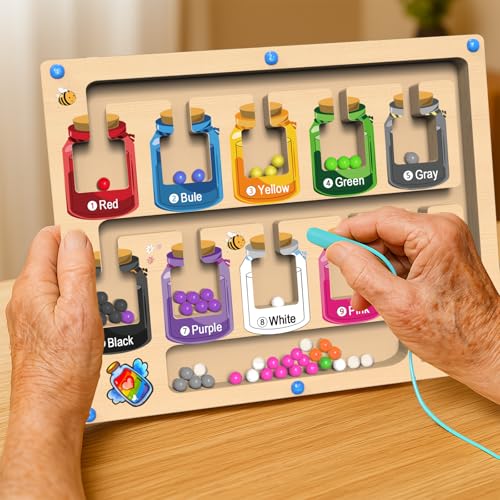
ECROUATY Store Busy Box for Dementia Patients is a calm, hands-on activity designed to keep seniors meaningfully engaged. This wooden color and number maze uses a magnetic pen to guide small beads into matching bottles. As a result, it gently supports hand-eye coordination, fine motor control, and basic thinking skills.
The bright colors and simple counting tasks also help reinforce color recognition and logical thinking without causing frustration. Importantly, the puzzle is fully enclosed, so there are no loose parts to worry about. The sturdy, shatter-resistant build holds up well to drops and repeated use.
With its large size, the board is easy to see and handle, even for seniors with reduced vision or grip strength. Overall, this busy box offers safe sensory stimulation while giving restless hands something purposeful to do.
This busy box suits seniors with dementia or Alzheimer’s who enjoy fidgeting and simple tasks. It works well for those needing safe sensory stimulation, gentle mental exercise, and a calming activity that does not rely on instructions or memory.
Pros
- Safe enclosed design
- Calming sensory activity
Cons
- Limited variety for advanced cognitive levels
5. Meroco Montessori Practical Life Brushing Teeth Model

The Meroco Montessori Practical Life Brushing Teeth Model is a unique and practical product designed to help seniors suffering from dementia learn the proper technique for brushing and flossing their teeth.
Moreover, it allows seniors to enjoy the activity of brushing their teeth while mastering the proper technique. This is critical for good dental health, as it can help prevent serious dental issues from arising.
The Meroco Montessori Practical Life Brushing Teeth Model is a great gift for seniors with cognitive impairment, as it can be used at home, in the car, or even while sitting on the porch area or in a park.
The package includes a wooden tray, a teeth model, a bamboo toothbrush, and dental cognitive cards. While this product is designed for children, it is suitable for seniors with cognitive decline as well.
Likewise, the packaging is also well-designed and easy to use, which makes it a great choice for caregivers who are looking for a product that is both functional and aesthetically pleasing.
Overall, the Meroco Montessori Practical Life Brushing Teeth Model is a high-quality product that is well-suited for seniors with dementia. Its unique design and practical features make it an excellent choice for anyone who is looking to improve their dental health while maintaining their independence.
Pros
- Helps dementia patients practice and improve their teeth-brushing skills
- Encourages seniors to engage in self-care activities, promoting independence
- Great gift for family members with cognitive impairment
Cons
- Brushing a model teeth may not translate well to brushing one’s teeth
Buyer’s Guide
How to choose the right busy boxes for dementia patients?
Choosing the right busy boxes for dementia patients can be a daunting task for caregivers, as there are numerous options available in the market.
Here are some factors to consider while selecting the best busy boxes for your loved one with dementia:
1. Consider their interests
When choosing a busy box, it is essential to consider the interests and hobbies of your loved one. Choose activities that they find enjoyable, as this will encourage them to engage with the box and participate in the activities provided.
For instance, if they enjoy gardening, consider a busy box that contains gardening-related activities like planting seeds or identifying different plants.
2. Level of difficulty
It is crucial to choose a busy box that matches the cognitive abilities of your loved one. Select a box that provides appropriate levels of difficulty and stimulation without being too challenging or overwhelming. For instance, choose activities that are easy to understand and follow, such as sorting objects or simple puzzles.
3. Multi-sensory engagement
Dementia can affect a person’s sensory perception, so it’s important to choose a busy box that engages multiple senses. Look for boxes that contain activities that stimulate the senses of touch, sight, hearing, and smell, such as textured materials, colorful objects, and familiar scents.
4. Safety
When choosing a busy box, safety is a primary concern. Make sure that the activities provided are safe and do not pose any risk of injury to your loved one. For instance, avoid small objects that can be swallowed, sharp objects that can cause harm or activities that require standing or moving around.
5. Ease of use
Choose a busy box that is easy to use and understand. It should not be too complicated to navigate, as this may cause frustration and discourage your loved one from using it. Make sure the activities provided are clearly explained and easy to follow, with simple instructions and intuitive designs.
By considering these factors, caregivers can choose the right busy boxes for their loved ones with dementia that will provide them with meaningful engagement and cognitive stimulation.
Is it appropriate to give a toy designed for a toddler to a senior person with Dementia?

In general, it is not appropriate to give a toy designed for a toddler to a senior person with Dementia. While some toys may seem simple or childish, they can still provide cognitive stimulation and sensory experiences for people with Dementia.
On one hand, toys designed for toddlers can have certain features that can be beneficial for seniors with dementia. For example, they are often brightly colored, which can help catch the attention of seniors who may have trouble focusing or may experience visual impairments.
Additionally, toys for toddlers are often designed to be simple and easy to use, which can be helpful for seniors with dementia who may struggle with more complex activities.
On the other hand, it is important to remember that seniors with dementia are adults and may feel patronized or belittled if they are given a toy designed for a much younger age group. This can be especially true if the toy is clearly meant for children and has cartoon characters or other juvenile designs.
Furthermore, many toys designed for toddlers may not be appropriate for seniors with dementia due to safety concerns. For example, toys with small parts or choking hazards may pose a danger to seniors who tend to put objects in their mouths or have swallowing difficulties.
Overall, while toys designed for toddlers may have certain benefits for seniors with dementia, it is important to consider the individual’s cognitive and physical abilities, as well as their personal preferences and interests, before making a decision.
It may be more appropriate to choose activities and games specifically designed for seniors with dementia or to adapt familiar hobbies and interests to make them more accessible and enjoyable for someone with cognitive impairment.
Final thoughts
Busy boxes can be a great way to engage and stimulate seniors with dementia, improving their quality of life and overall well-being. By considering factors such as the person’s interests, abilities, and stage of dementia, caregivers can choose the right busy box to provide therapeutic benefits.
Do you have any experience using busy boxes? Share your thoughts and experiences in the comments below.
