

5 Easiest Mp3 Players For Elderly With Dementia
As an Amazon Associate, I earn from qualifying purchase.
Have you ever thought about how music can bring joy and memories to someone with dementia? It’s truly amazing how a familiar tune can light up their faces and take them back to happier times. I’ve found that simple Mp3 players can make this experience even more accessible for our loved ones. Today, I’ll share some of the easiest Mp3 players tailored for the elderly with dementia.
Here Are the Best Easiest Mp3 Players For Elderly With Dementia
1. Conrain MP3 Player with Bluetooth

The Conrain MP3 Player with Bluetooth has a neat, pocket-sized design that makes it really light and easy to carry around.
You’ll find the controls on the side of the device, with both buttons and touch features. This makes it simple to go through songs and change the volume.
Even though it’s small, this player feels solid when you hold it. That makes it tougher and lasts longer.
A great feature is the auto shutoff. It helps save battery by turning off the player when you forget to.
But there are some things that could be better. The “BACK” button on the touch screen is quite small, even though you use it a lot. A bigger button would have been easier to use.
Also, the manual that comes with the player has a few mistakes. Like mixing up the pause and play buttons in the instructions. This might confuse some people.
To sum it up, the Conrain MP3 Player with Bluetooth is a light and strong choice for anyone wanting a simple device. It has a few small issues like the tiny “BACK” button and mistakes in the manual. But overall, it’s a good option for older people, especially those with dementia.
2. Xidehuy MP3 Player with 32GB TF Card

The Xidehuy MP3 Player with its 32GB TF Card is really easy to use, especially if you’re used to flip phones. Its design is simple, making it easy for someone with dementia to use without getting confused.
A great thing about this MP3 player is its battery life. You can listen to music for up to 9 hours on just one charge. That means you can enjoy your favorite songs for a long time without having to charge it often.
Now, some people might find that the buttons can be a little sticky. While this might bother you a bit, it doesn’t really stop the MP3 player from working well. And considering the price isn’t too high, you might be able to overlook this small issue.
When it comes to how well it works and how easy it is to use, people often say the Xidehuy MP3 Player is similar to an iPod. It does a lot of the same things but doesn’t cost as much. So, if you’re looking for a cheaper option that still works well, this MP3 player could be a good choice for you.
3. Aigital 32GB Bluetooth MP3 Player
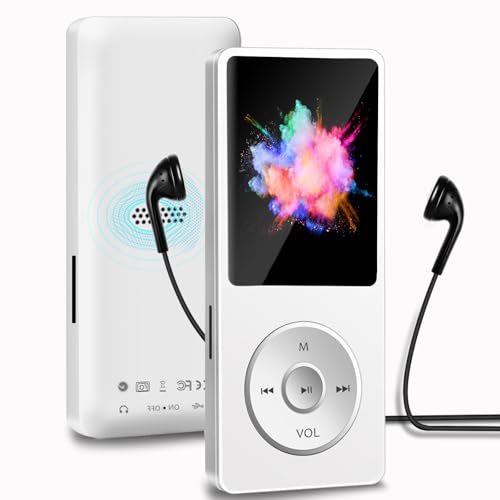
The Aigital 32GB Bluetooth MP3 Player is a good choice for its price. It works well as an MP3 player and gives reliable performance. If you want something simple and straightforward, this is a good pick.
One thing that makes this MP3 player special is how easy it is to download music. For example, if you’re helping someone with dementia, you’ll find it simple to put music on this device. You don’t have to mess with connecting other gadgets, which makes it easier and faster to get music onto the player.
Besides playing music, this MP3 player also has a Voice Recorder. This can be handy for older adults who like to keep a diary or record important things to remember. It’s like having an extra tool that can be useful in daily life.
4. Conodo Bluetooth Mp3 Player
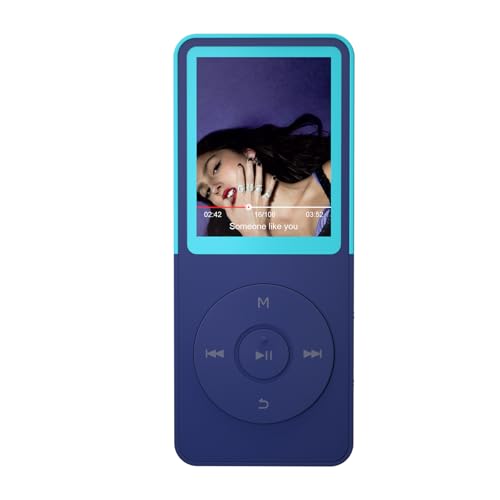
The Conodo Bluetooth Mp3 Player is made especially for elderly people with dementia. One great feature is that you can use it with both Bluetooth headphones and regular wired earphones. This gives you the choice to use the headphones you like best.
Its design is made to be helpful for seniors. It’s bright blue, so it’s easy to spot if it gets lost around the house. This is really handy for those who might forget where they put things.
The Mp3 player keeps things simple. It only has five buttons, making it easy to use without feeling confused. It’s designed to be user-friendly, especially for older people or those with dementia.
If you prefer wired earphones over Bluetooth, this Mp3 player has got you covered. You can use your regular wired earphones with it. It caters to different preferences, showing that it cares about what its users want.
5. Voxitenus Store MP3 Player

The Voxitenus Store MP3 Player is really simple to use. Setting it up, adding songs, and moving around its menus are all easy tasks. This makes it a great choice for someone with dementia, avoiding any confusion from complicated menus.
You’ll find the battery life of this MP3 player to be quite impressive. It charges up quickly and lasts a long time. This means you won’t have to charge it as often, which is perfect for older folks who might forget to plug it in frequently.
When it comes to its build and looks, this MP3 player has good quality parts. It feels strong when you hold it, which suggests it can handle being used regularly. Plus, the buttons are easy to understand, and everything is laid out in a way that’s simple to navigate.
If you love having lots of music choices, you’ll appreciate the mini SD card that comes with it. It has plenty of space for all your favorite songs, so you don’t have to worry about running out of room. Just think, you can have hours and hours of music right at your fingertips!
Buyer’s Guide: Choosing the Easiest MP3 Players for Elderly With Dementia
Music can be deeply comforting for someone living with dementia. A familiar song can reduce anxiety, lift mood, and even bring back memories that feel lost. But the device playing that music matters more than many caregivers realize. Not all MP3 players are suitable for seniors with memory loss, and the wrong one can cause confusion or frustration.
This guide will help you choose an MP3 player that truly supports your loved one, rather than overwhelms them.
Why Seniors With Dementia Need a Different MP3 Player
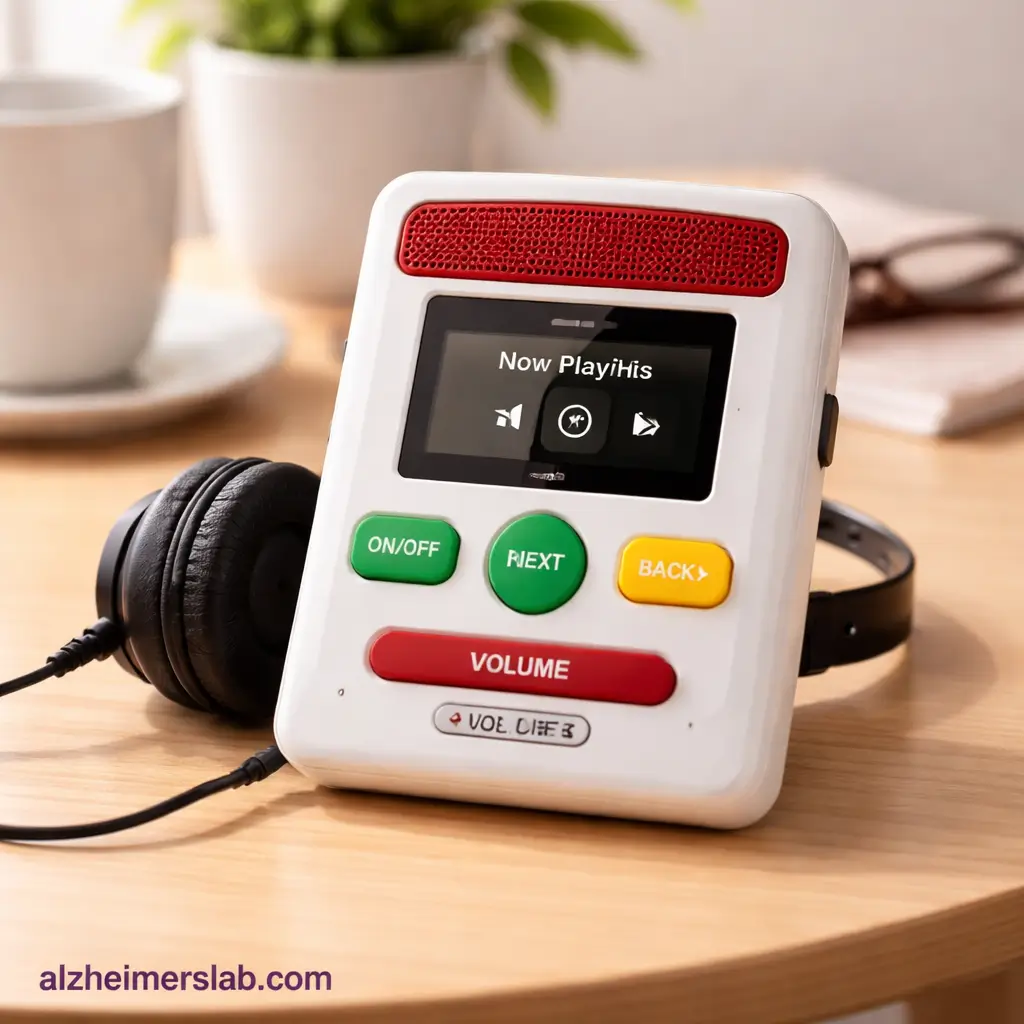
Most modern MP3 players are designed for younger users. They have small screens, menus, apps, and buttons that require remembering steps. For someone with dementia, this can quickly become confusing.
A person with memory loss may forget how to unlock a screen, navigate folders, or adjust settings. When the device feels complicated, they may stop using it altogether. Some may become anxious or upset if they cannot make it work.
That’s why seniors with dementia benefit from MP3 players that are extremely simple. Fewer buttons, no menus, and no unnecessary features help reduce stress. The goal is not technology—it’s comfort, familiarity, and ease.
How to Use It and Where to Place It
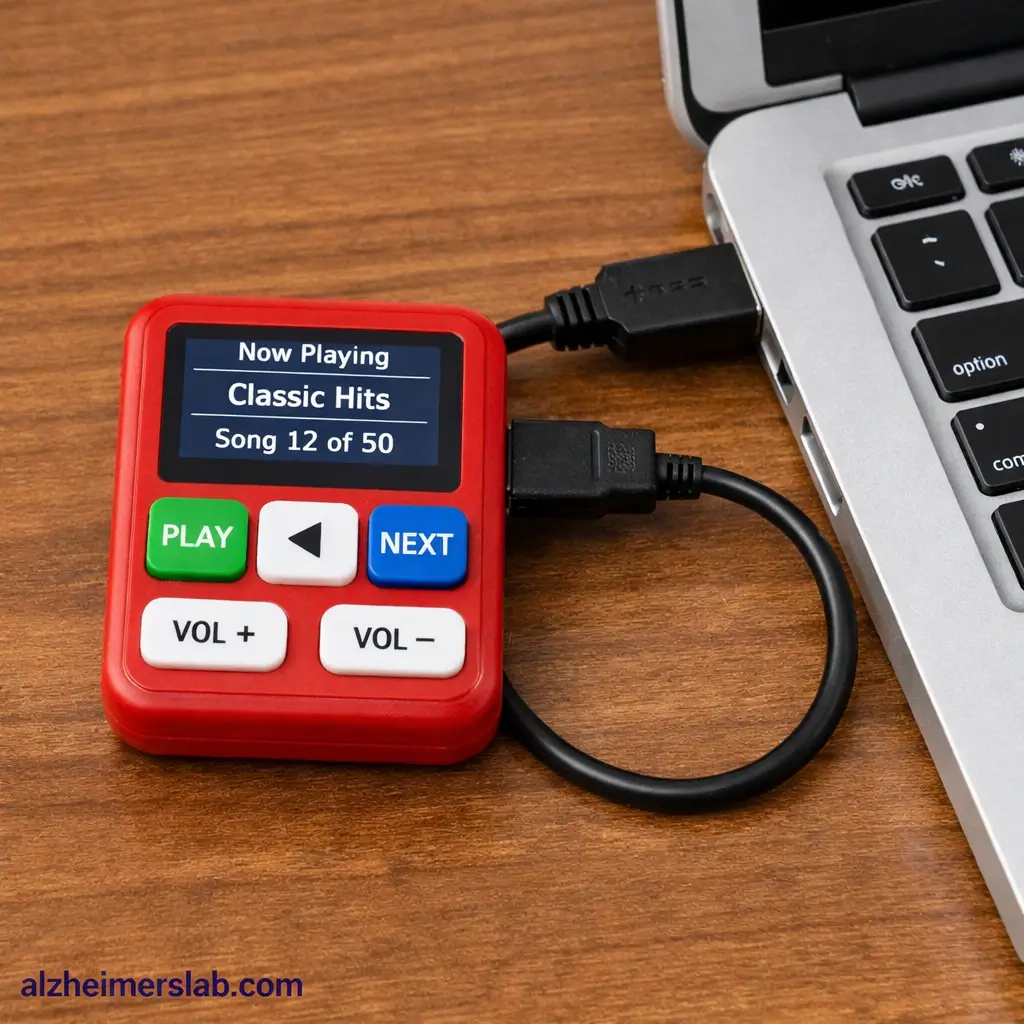
The best MP3 player for dementia is one that requires little to no learning. Ideally, you set it up once, and your loved one only needs to press one button to start music.
Before giving it to them, load the device with familiar songs. These could be songs from their youth, religious music, or calming instrumental tracks. Keep the playlist consistent so they associate the device with a pleasant experience.
Where you place the MP3 player matters. Many caregivers clip it to clothing, place it in a small pouch around the neck, or keep it by the bed or favorite chair. If your loved one tends to misplace items, consider a device that stays in one familiar location.
Headphones should also be chosen carefully. Over-ear headphones are often easier than earbuds, which can be lost or uncomfortable. Some seniors prefer a small speaker instead, especially if headphones cause irritation.
Things to Look for When Buying
Simplicity should be your top priority. Look for an MP3 player with very few buttons. One-button play or clearly labeled physical buttons are ideal.
Avoid touchscreens. They may seem modern, but they are harder for seniors with dementia to use. Physical buttons provide feedback and are easier to understand.
Battery life is important. A device that lasts several days on one charge reduces the chance of it stopping unexpectedly. Charging should also be simple, preferably with a dock or a single cable.
Volume control should be limited. Some MP3 players allow you to set a maximum volume, which helps protect hearing and prevents sudden loud sounds.
Durability is another factor. Seniors may drop devices accidentally. A sturdy build or protective case can make a big difference.
How an MP3 Player Can Help and Safety Concerns
According to research done by a Danish University, music therapy has been shown to help reduce agitation, improve mood, and support emotional well-being in people with dementia. Familiar music can help someone feel grounded and less confused, especially during stressful moments.
An MP3 player can also help during daily routines. Playing calming music during bathing, dressing, or bedtime can make these activities smoother for both the senior and the caregiver.
However, safety matters. Make sure headphone cords are not long enough to pose a tripping or choking risk. Check that volume levels are safe, especially if your loved one cannot communicate discomfort clearly.
Always observe how your loved one reacts. If the device causes frustration, it may need adjustment or replacement. The goal is comfort, not control.
My Quick Advice
If I had to give one honest piece of advice, it would be this: choose the simplest device you can find, even if it feels “too basic.” Dementia changes how the brain processes information. What feels easy to you may feel overwhelming to them.
Focus on function, not features. Your loved one does not need Bluetooth, apps, or screens. They need music that starts when they press a button and stops when they want it to.
Set the device up yourself and test it in real situations. Watch how they interact with it. Small adjustments can make a big difference.
Most importantly, remember that this is not about technology. It’s about creating moments of calm, joy, and connection. When music works, it can reach places that words no longer can.

Hello! I appreciate your article very much! Quick question: the two graphics of the MP3 players at the end of the article are not in the list of recommendations, but they look great (the squarish white one and red one). Can you tell me what brand they are where I could find one of them?
Thanks for the comment, Marne. But the one’s you are reffering are not real. They are animated images. Hope you find the best one online.