
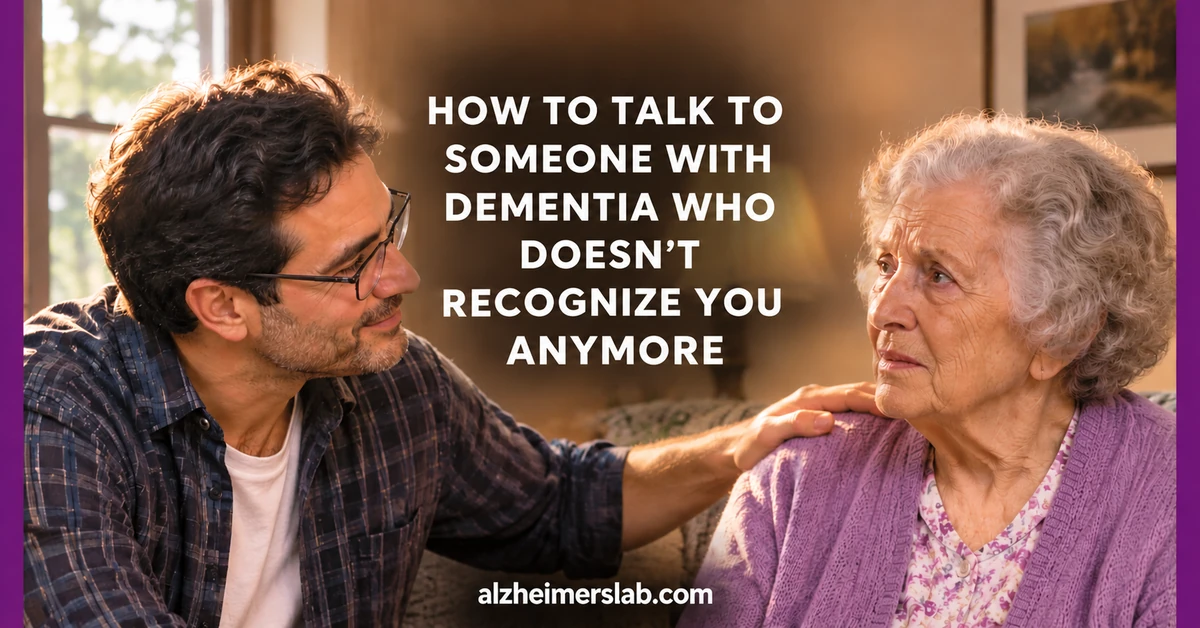
How to Talk to Someone With Dementia Who Doesn’t Recognize You Anymore
Looking at someone you love with your whole heart and seeing blankness in their eyes is one of the sharpest pains in caregiving. You walk into the room with a warm smile, say something familiar, and get met with a polite but distant stare like you are a stranger dropping off groceries. That quiet ache in your chest is real, and it hits even harder when you have spent years showing up every single day.
Out here in California, we talk a lot about staying sunny and upbeat, yet nobody can put a bright spin on not being recognized by your own parent. You might wonder if you did something wrong or if all those years of shared memories just vanished into thin air. When you take a breath and look at what is happening inside their brain, you realize it is not a rejection of you—it is a symptom of the illness.
Why Recognition Slips Away in Dementia
Dementia does not erase love overnight, yet it slowly changes how the brain stores, retrieves, and connects information. A person might still recognize a face from thirty years ago while struggling to match a current face with a name or a current role. Sometimes they remember who you are in their heart, even if their brain cannot pull up the exact label in that moment.
Confusion around identity and surroundings can also trigger misidentification, where a familiar person feels unfamiliar or out of place. Research on neuropsychiatric symptoms and caregiver burden in dementia
notes that symptoms like misidentification and delusions are closely tied to stress for both the person living with dementia and their family caregiver. When the brain loses its usual signposts, the world starts feeling unpredictable, and fear often shows up disguised as distance or suspicion.
It helps to remember that memory loss is not a scoreboard of how much you matter. Even when the words or names slip out of reach, warmth, tone of voice, and gentle presence still register on a basic emotional level. Understanding that shift takes a little bit of the personal sting out of a really hard moment.
How Time Shifts Can Confuse Familiar Faces
Sometimes a person with dementia is living in an earlier chapter of their life without even realizing it. If they feel like they are twenty-five years old, seeing a grown caregiver in front of them does not match their mental picture. That mismatch makes a familiar voice sound strange or unexpected.
You do not have to win a debate over what year it is to keep the moment peaceful. Stepping into their comfort zone instead of pulling them into yours often lowers the tension right away. A calm, easygoing approach helps them feel safer in their own skin.
What Not to Do When They Don’t Know You
When someone looks right past you, your first instinct might be to quiz them or push for the right answer. Asking questions like, “Don’t you know who I am?” or “Who am I?” puts heavy pressure on a brain that is already working overtime. Instead of jogging their memory, those questions usually make them feel embarrassed, anxious, or defensive.
Correcting them with cold facts rarely works any better when they are disoriented. Saying, “I’m your kid, we had lunch yesterday,” forces them to admit they are confused, which can spark frustration or pushback. Arguments over who is right only raise the tension in the room and leave both of you feeling worn down.
Try not to take a blank look or a cold comment as a verdict on your relationship. When a person’s sense of time shifts back twenty or forty years, seeing a grown adult instead of a younger face can feel jarring. Stepping back from the urge to prove your identity keeps a tough moment from turning into a bigger blowup.
Why Quizzing Backfires Every Time
Putting someone on the spot when their memory is foggy feels like a test they cannot pass. Nobody likes failing a test in front of someone they care about, even if they cannot put that feeling into words. A sharp or guarded reply is often just self-protection.
When you drop the quiz, you take a massive load off both of your shoulders. You stop waiting for a name that might not come today and start focusing on how to make the next five minutes pleasant. That shift changes the whole mood in the room.
How to Connect Without Forcing the Name
The easiest way to ease the awkwardness is to introduce yourself gently without making a big deal out of it. You can smile, keep your posture relaxed, and say something simple like, “Hi, it’s me, I brought your favorite tea.” Giving them that context right away saves them from having to guess and helps them settle into the moment.
Focus on how the moment feels rather than whether they get your name right. A study on caregiver validating communication and dementia responses
found that affirming and acknowledging feelings supports calmer, more cooperative interactions during daily care. When you meet someone with patience instead of correction, their guard often drops just enough for a real connection to happen.
Lean into things that feel safe, familiar, and low-pressure in the room. Putting on a song they used to love, flipping through a simple photo album, or sitting together quietly on the porch can bridge the gap. You do not need a deep speech to be meaningful company when you are right there beside them.
Using Gentle Cues and Shared Activities
Shared activities give you something natural to focus on together when conversation feels stiff. Folding towels side by side, shelling peas, or listening to old radio shows takes the spotlight off memory. Side-by-side moments often feel much easier than face-to-face questioning.
Keep your voice steady, warm, and unhurried as you share the space. Even a simple touch on the arm—if they welcome it—can say more than a long explanation. You are showing up as a steady, friendly presence in their day.
Handling Tough Moments Like Mistaken Identity
Sometimes a person with dementia does not just forget who you are—they mistake you for someone else entirely. They might call you by a sibling’s name, a spouse’s name, or think you work at a clinic or hotel. Hearing the wrong name can feel like a punch in the gut, especially when you are the one handling all the daily details.
Instead of correcting the label right away, tune into the feeling behind what they are saying. If they think you are someone they trust or feel safe around, that actually means they sense kindness in you. You can answer their need gently without lying or getting tangled up in a complicated story.
A systematic review on personalised dementia care communication strategies
highlights that calm tone, reassurance, and person-centered responses help preserve dignity and reduce distress. Keeping your sentences short, warm, and steady makes it much easier for them to follow along. If they get agitated or suspicious, giving them a little space or changing the activity often helps reset the mood.
When They Think You Are a Stranger or Intruder
Mistaken identity gets extra tricky when someone feels suspicious or thinks a stranger is in their house. Arguing about who belongs there usually makes them dig in harder and feel more threatened. Calmly stepping back a step or offering a neutral reassurance can help lower their defenses.
Sometimes a brief reset works wonders when a visit turns tense. Stepping into the kitchen for a minute, putting on calm music, or asking a gentle question about something safe can break the loop. If fear stays high, protecting your own safety and giving them breathing room is always the right call.
Protecting Your Heart Through the Shift
Caregiving asks you to grieve small losses over and over again while still showing up for today. Not being recognized is one of those quiet losses that people outside caregiving rarely understand. Giving yourself permission to feel sad, tired, or numb after a hard visit is completely normal.
Talk to someone who gets what daily caregiving feels like, whether that is a close friend, a support group, or a counselor. Bottling up that hurt only makes the next visit heavier before you even walk through the door. You are allowed to care deeply and still feel the weight of how much has changed.
Remind yourself that your steady presence still counts even when memory fades. Showing up with a gentle voice, a warm blanket, and a calm spirit is a gift every single day. Even on the days they cannot name you, you are still right there holding down the fort with love.
Giving Yourself Space After Hard Visits
Do not force yourself to bounce straight back into work or errands right after a tough conversation. Take a few minutes to breathe, drink some water, or step outside into the fresh air. Letting the sting settle helps keep old hurt from piling up day after day.
Caregivers often hold themselves to impossible standards on their hardest days. You are doing human work in a deeply emotional situation, not running a machine. Be just as gentle with yourself as you are trying to be with them.
Closing Thoughts
Being unrecognized does not erase the history you share or the care you give day in and day out. Take each visit one small moment at a time, keep your tone gentle, and give yourself grace when things feel heavy. If you want another solid read on keeping daily interactions calm, take a look at How to Avoid Upsetting Someone With Dementia.
