
Best Room Layout for Someone With Dementia
Dementia changes the way a person understands and interacts with their surroundings. A room that feels normal to you can become confusing, overwhelming, or even dangerous for someone living with memory loss. That is why the physical environment matters so much.
Many caregivers focus on medications, routines, and daily care. While those things are important, the layout of a home can have just as much impact on comfort, independence, and safety. A well-designed room can reduce anxiety, prevent falls, encourage daily activities, and help a person feel more confident throughout the day.
The goal is not to create a hospital-like environment. In fact, the best dementia-friendly rooms often look warm, familiar, and comfortable. Small adjustments to furniture placement, lighting, storage, and visual cues can make everyday life much easier.
In this guide, I will walk you through the ideal room layout for someone with dementia, covering every major area of the home and explaining why each change matters.
Why Room Layout Matters in Dementia Care
As dementia progresses, the brain has a harder time processing visual information, recognizing objects, judging distances, and navigating spaces. What appears obvious to you may not be obvious to your loved one.
A cluttered room can feel overwhelming because the brain struggles to filter information. Dark shadows may be mistaken for holes in the floor. Furniture placed in walkways can become a tripping hazard. Even simple tasks like finding a bathroom or locating a favorite chair can become frustrating.
Good room design supports the remaining abilities of a person with dementia instead of constantly challenging them. When rooms are easier to understand, daily activities require less mental effort. This often reduces stress, agitation, and confusion.
The best layouts follow a simple principle: make important things easy to see, easy to reach, and easy to understand.
General Principles for Every Room
Before looking at specific rooms, there are several design rules that apply throughout the entire home.
Keep Walking Paths Clear
People with dementia may have difficulty judging distances and obstacles. Wide, unobstructed walking paths help prevent falls and make movement easier.
Remove unnecessary furniture, decorative stands, baskets, and other objects that could block pathways. Arrange furniture so there is a clear route between commonly used areas.
A person should be able to move comfortably from one room to another without having to navigate around obstacles.
Reduce Visual Clutter
Too many objects can make a room feel confusing. Large collections, excessive decorations, crowded shelves, and stacks of belongings may overwhelm someone whose brain is already working harder to process information.
This does not mean the room should look empty. Instead, focus on displaying meaningful and useful items while storing less important belongings out of sight.
Improve Lighting
Poor lighting can increase confusion and create shadows that may be misinterpreted.
Natural daylight is often best during the daytime. In the evening, use consistent lighting throughout the home to reduce dark areas. Hallways, bathrooms, and bedrooms should be especially well lit.
Good lighting can also support healthier sleep-wake cycles.
Use Familiar Furniture
Sudden changes can be unsettling for someone with dementia. Whenever possible, keep familiar furniture and cherished items in place.
The goal is not to redesign the home completely. It is to improve safety and usability while preserving familiarity.
Create Strong Visual Contrast
People with dementia sometimes struggle to distinguish objects from their surroundings.
Using contrast can help. For example, a dark-colored chair against a light wall may be easier to identify than furniture that blends into the background. Similarly, a toilet seat that contrasts with the bathroom floor may be easier to recognize.
The Best Dementia-Friendly Living Room Layout
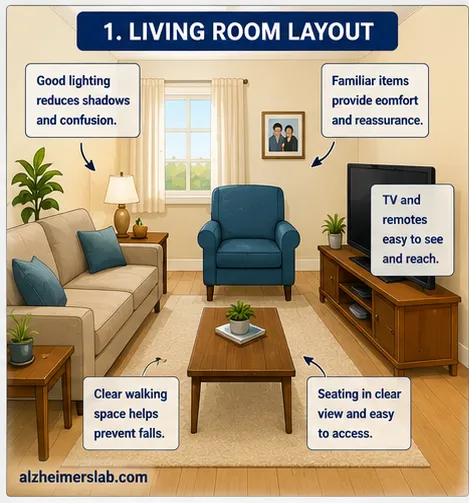
The living room is often where a person spends most of the day. Because of this, it should be comfortable, safe, and easy to navigate.
Place Seating in Clear View
The main chair or sofa should be immediately visible when entering the room. If a person can quickly identify where to sit, they are less likely to feel uncertain or anxious.
Avoid placing furniture in ways that require navigating around multiple obstacles.
A favorite chair should ideally face an area of interest, such as a television, window, fireplace, or family gathering space.
Avoid Complex Furniture Arrangements
Large numbers of chairs, side tables, and decorative pieces can make movement difficult.
Simple layouts generally work best. A sofa, a comfortable chair, and a few essential tables are often enough.
Leaving open floor space helps support safe walking.
Make Meaningful Items Visible
Photos, memory books, favorite blankets, and treasured possessions can provide comfort and reassurance.
Place these items where they are easy to see rather than storing them away. Familiar objects often help reinforce identity and reduce anxiety.
Keep Remote Controls and Essentials Accessible
Searching for everyday items can be frustrating.
Designate consistent locations for frequently used objects such as television remotes, glasses, tissues, and reading materials.
Consistency is often more important than the exact location itself.
The Best Bedroom Layout for Dementia
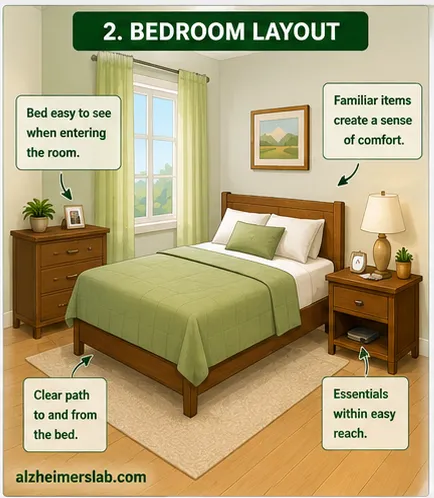
The bedroom should feel calm, predictable, and restful.
Keep the Bed Easy to Find
When entering the room, the bed should be the most obvious piece of furniture.
Avoid layouts where the bed is hidden behind large furniture or difficult to see from the doorway.
This simple adjustment can help reduce nighttime confusion.
Reduce Excess Furniture
Bedrooms often accumulate unused chairs, storage boxes, exercise equipment, and decorative items.
Too many objects can increase confusion and create tripping hazards.
Keep only furniture that serves a clear purpose.
Position Nightstands Within Easy Reach
Important items such as glasses, medications, water, tissues, and a lamp should be easily accessible from bed.
Reaching, stretching, or searching in the dark increases fall risk.
Use Soft, Consistent Lighting
Nighttime confusion is common in dementia.
A bedside lamp, hallway light, or motion-activated night light can make orientation easier during overnight bathroom visits.
The goal is to reduce darkness without making the room overly bright.
Display Familiar Personal Items
Family photos, meaningful artwork, and treasured keepsakes can create a sense of security.
However, avoid overcrowding surfaces with too many objects.
A few recognizable items are usually more effective than dozens of decorations.
The Best Bathroom Layout for Dementia
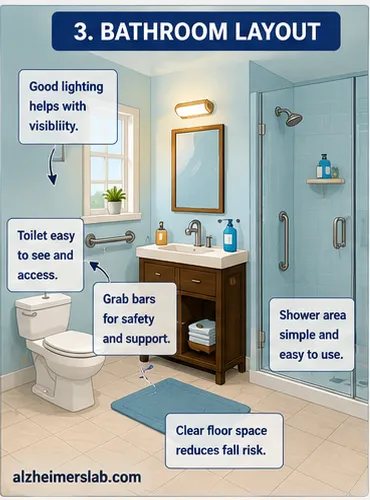
Bathrooms present some of the highest safety risks in the home.
A thoughtful layout can make a significant difference.
Make the Toilet Easy to See
The toilet should be immediately visible when entering the bathroom.
If possible, avoid placing large cabinets or partitions that block the view.
Visual recognition supports independence.
Minimize Countertop Clutter
Crowded counters can create confusion.
Keep only essential items visible, such as soap, a toothbrush, and hand towels.
Store extra products inside cabinets.
Use Open Storage for Frequently Used Items
When appropriate, open shelving can make it easier to identify important items.
Transparent containers may also help someone locate what they need without searching.
Improve Safety Around the Shower
Arrange towels, grab bars, and bathing supplies so they are easy to reach.
Avoid requiring unnecessary bending, stretching, or turning.
A simple, organized shower area is generally safer and less stressful.
Maintain Clear Floor Space
Keep floors free of laundry baskets, scales, trash bins, and other obstacles.
Bathrooms are already high-risk areas for falls, so every unnecessary obstacle should be removed.
The Best Kitchen Layout for Dementia
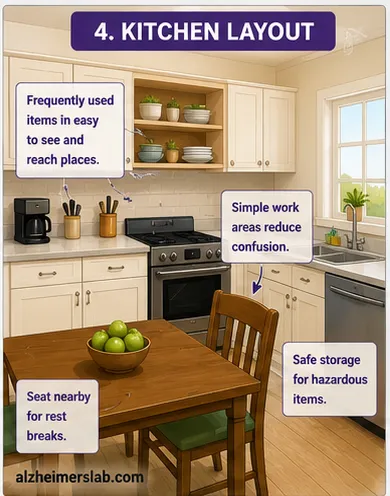
The kitchen can support independence, but it also presents safety concerns.
The right layout balances both goals.
Keep Frequently Used Items Visible
People with dementia may forget what is stored inside cabinets.
Frequently used dishes, cups, and snacks are often easier to find when placed in visible, consistent locations.
Clear labeling can also help.
Simplify Work Areas
Too many appliances and utensils can feel overwhelming.
Keep countertops organized and limit visible items to those used regularly.
A cleaner workspace often makes kitchen tasks easier to understand.
Create Clear Zones
Grouping related items together improves usability.
For example, keep plates, cups, and eating utensils near each other. Store coffee supplies in one area. Keep cleaning products separate from food preparation spaces.
Logical organization reduces frustration.
Keep Seating Nearby
A small table or chair can provide a place to rest during meal preparation.
Fatigue can increase confusion, so convenient seating may be helpful.
Reduce Hazards
Store sharp objects, cleaning products, and potentially dangerous equipment securely.
The safest layout minimizes opportunities for accidental injury while still supporting independence whenever possible.
The Best Hallway Layout for Dementia
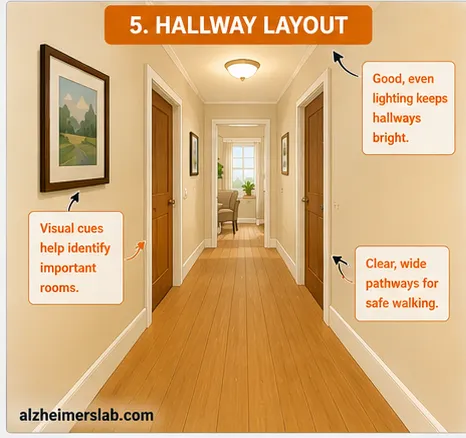
Hallways are often overlooked, yet they play an important role in navigation.
Keep Hallways Wide and Open
Remove unnecessary furniture, plant stands, storage units, and decorations.
The hallway should function as a simple pathway rather than a storage area.
Improve Lighting Consistency
Hallways should have even lighting from one end to the other.
Dark sections can create confusion and make navigation more difficult.
Use Helpful Visual Cues
Photos, signs, or color cues can help guide someone toward important rooms.
For example, a recognizable family photo near a bedroom door may help with identification.
Visual cues are often more effective than verbal reminders.
The Best Dining Room Layout for Dementia
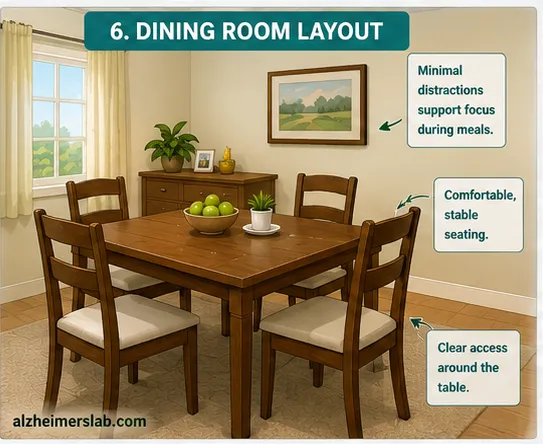
Mealtimes can become challenging as dementia progresses.
A supportive dining room layout can improve focus and reduce distractions.
Keep the Table Simple
Busy tablecloths, excessive decorations, and unnecessary items may make it harder to focus on eating.
Simple place settings often work best.
Use Comfortable Seating
Chairs should be stable, comfortable, and easy to get in and out of.
Furniture that rocks, swivels, or moves unexpectedly can create difficulty.
Reduce Noise and Distractions
Televisions, loud conversations, and competing activities may make meals more confusing.
A calmer environment helps many people focus better on eating.
Ensure Easy Access
The route to the dining area should be clear and straightforward.
Reducing navigation challenges can help maintain mealtime independence.
Creating a Safe Outdoor Space
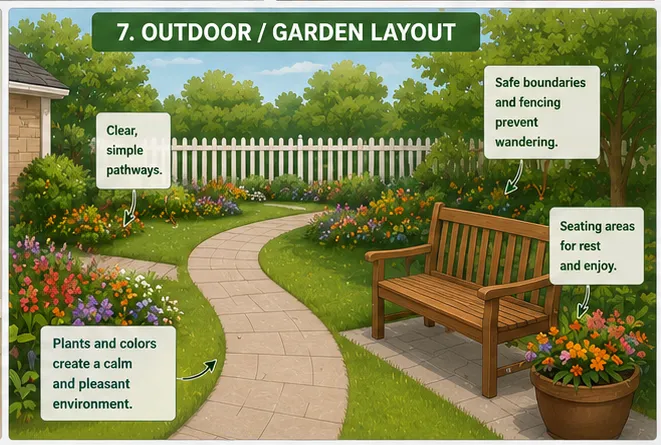
Outdoor areas can provide exercise, fresh air, and emotional benefits.
However, they should be designed thoughtfully.
Create Clear Walking Paths
Paths should be smooth, level, and easy to follow.
Avoid sudden changes in surface height whenever possible.
Provide Comfortable Seating
Benches and chairs placed along walking routes allow for rest breaks.
This encourages outdoor activity without creating unnecessary strain.
Limit Visual Confusion
Complicated garden layouts with multiple branching paths may be difficult to navigate.
Simple, predictable pathways are generally easier to understand.
Make Boundaries Clear
Fences, gates, and landscaping can help define outdoor spaces while supporting safety.
The goal is to encourage freedom of movement without increasing wandering risks.
Common Room Layout Mistakes to Avoid
Many homes unintentionally create challenges for people with dementia.
One common mistake is overcrowding rooms with furniture. Another is frequently rearranging furniture, which can make familiar spaces suddenly feel unfamiliar.
Poor lighting is another major issue. Dark corners and strong shadows often increase confusion. Similarly, cluttered countertops, crowded shelves, and excessive decorations can overwhelm visual processing.
Finally, many caregivers hide useful items completely out of sight. While reducing clutter is important, essential objects should remain visible and easy to identify.
Final Thoughts
The best room layout for someone with dementia is not about creating a perfect home. It is about creating an environment that supports comfort, safety, and independence.
Every person experiences dementia differently, so there is no single layout that works for everyone. Still, most people benefit from clear pathways, good lighting, reduced clutter, familiar furniture, and easy-to-see everyday items.
When you look at each room through the eyes of someone living with memory loss, small changes often become obvious. A chair moved a few feet, a brighter hallway, a clearer bathroom layout, or a less cluttered kitchen can have a meaningful impact on daily life.
In my experience, the best dementia-friendly homes are not the most expensive or the most modern. They are the ones that feel predictable, comfortable, and easy to understand. Those qualities can help a person maintain confidence and dignity for as long as possible.
