
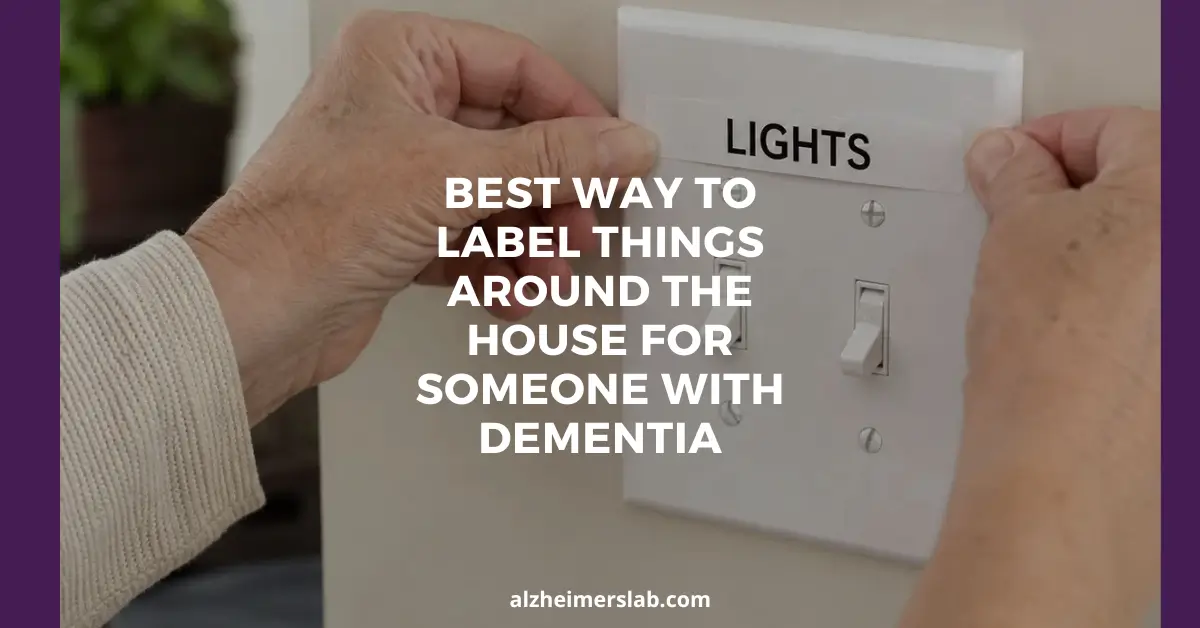
How to Label Household Items for Someone With Dementia
Living with dementia slowly changes how a person understands and interacts with their surroundings. Everyday items that once seemed obvious can become difficult to recognize. A bathroom door may no longer be easy to identify. Kitchen cabinets may all look the same. Even a familiar bedroom can sometimes feel confusing.
This is where simple labels can make a meaningful difference.
I have found that many caregivers think labels are only useful in the later stages of dementia. In reality, introducing them earlier often works much better. When labels become part of the home’s normal environment, the person has more time to get used to using them while they can still learn new routines.
The goal is not to turn your home into a hospital. Instead, good labeling helps your loved one stay independent for longer. It reduces unnecessary confusion, lowers frustration, and gives gentle reminders that support memory instead of replacing it.
In this guide, I’ll explain how to label a home effectively, what works best according to dementia care principles, what mistakes to avoid, and how you can make labels feel like a natural part of everyday life.
Why Labels Help Someone With Dementia
Dementia affects much more than memory. It can also interfere with visual recognition, attention, language, problem-solving, and the ability to find familiar places around the home.
For example, someone may remember that they need to use the bathroom but struggle to recognize which door leads to it. They may know they want a spoon but forget which drawer contains it. Sometimes they simply cannot connect what they see with what they are looking for.
A clear label reduces the amount of thinking required. Instead of guessing, searching, or opening multiple cabinets, the person receives a straightforward visual cue that points them in the right direction.
This has several benefits.
First, it helps preserve independence. When someone can locate everyday items without asking for help every few minutes, they often feel more confident and capable.
Second, labels reduce frustration. Repeatedly searching for common household items can become exhausting. Small successes throughout the day often improve mood and reduce anxiety.
Third, labels can lower caregiver stress. You may spend less time answering the same questions or helping someone find familiar rooms and objects. That allows both of you to enjoy calmer daily routines.
Finally, labels create consistency. Dementia often makes unfamiliar situations more difficult. When every important room and storage area is clearly identified, the home becomes easier to navigate.
It is important to remember that labels do not improve memory itself. Instead, they act as external memory supports that compensate for some of the changes caused by dementia.
Will Someone With Dementia Actually Understand Labels?
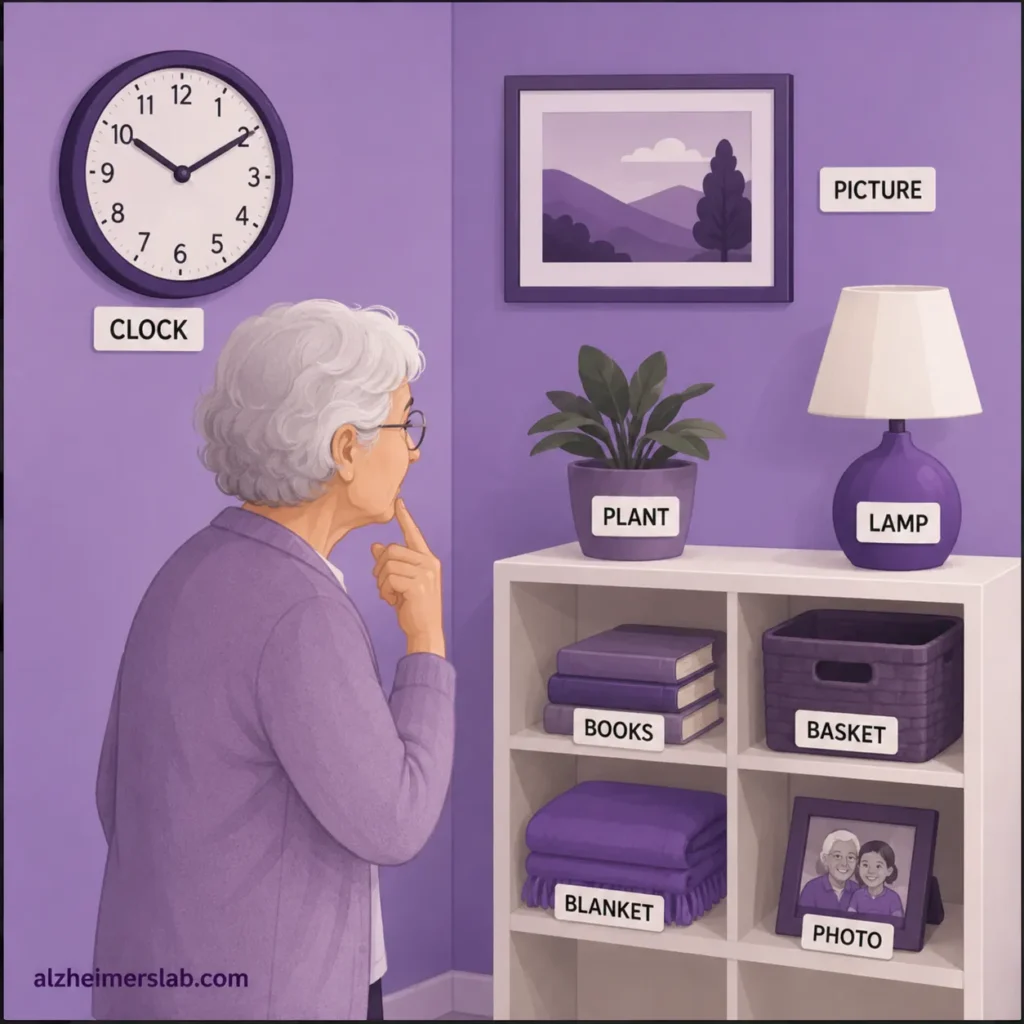
The answer depends on the stage of dementia and the individual’s remaining abilities.
Many people in the early stages continue to read well. In fact, simple written labels may work surprisingly well because reading is often preserved longer than short-term memory.
As dementia progresses, reading ability may gradually decline. At this point, adding a clear picture alongside the word often makes labels easier to understand. A photograph of a toilet next to the word “Bathroom” is usually more effective than either one alone.
Every person experiences dementia differently. Some individuals respond better to words. Others rely more on pictures. There is no universal solution, which is why I recommend observing what your loved one naturally responds to before labeling the entire house.
Try one or two labels first. Watch whether they notice them and use them without prompting. If they do, you can gradually expand the system throughout the home.
Keep your expectations realistic. Labels are meant to support daily functioning, not eliminate every episode of confusion. Some days they will work very well. Other days, especially if your loved one is tired, ill, or experiencing increased confusion, they may still need guidance despite the labels.
When Is the Right Time to Start Labeling?
One of the biggest mistakes caregivers make is waiting too long.
Many families delay labeling because they worry it will make dementia feel “more real” or because they think their loved one is still managing well enough.
However, dementia is progressive. New learning becomes more difficult over time. If labels are introduced only after severe confusion develops, the person may have a harder time understanding what the labels are for.
Instead, I recommend introducing labels during the early stages or when you first notice your loved one having difficulty locating rooms or commonly used items.
Starting early offers several advantages.
The labels become familiar before they are truly needed.
The person is more likely to develop the habit of looking at them.
The changes feel gradual rather than sudden.
Most importantly, early labeling supports independence instead of reacting to a crisis after it has already occurred.
You also do not need to label everything at once.
Begin with the places that cause the most confusion. For many families, that means the bathroom, bedroom, kitchen cabinets, clothing storage, and medication area. Once those are working well, you can decide whether additional labels would be helpful.
Think of labeling as one tool among many that helps create a dementia-friendly home. Just like improving lighting, reducing clutter, or removing trip hazards, labels work best when they are introduced thoughtfully rather than all at once.
The Best Way to Label Things Around the House
Simply sticking pieces of paper on cabinets rarely produces the best results. Good dementia-friendly labels are designed to be easy to notice, easy to read, and easy to understand.
The first principle is simplicity.
Use short, familiar words instead of long descriptions. “Bathroom” is much better than “Restroom Facilities.” “Plates” is clearer than “Dinnerware.” The goal is immediate recognition, not perfect wording.
Next, choose a large, easy-to-read font. Small decorative lettering may look attractive, but it becomes difficult for older adults to read. A simple sans-serif font in large print is usually the best choice because the letters remain clear even for people with reduced vision.
High contrast is equally important. Black lettering on a white background or white lettering on a dark background is generally easier to read than labels with busy colors or decorative patterns. Good lighting around the label also makes a significant difference.
Placement matters just as much as the design itself. Position labels at normal eye level whenever possible. A label hidden behind a partially open door or placed too high on a cabinet is much less likely to be noticed. Consistent placement throughout the house also helps build familiarity. If every cabinet label is centered on the front, your loved one learns where to look.
Whenever appropriate, combine words with clear photographs rather than simple drawings. Real photos of common household items often provide stronger visual cues than cartoons or abstract icons. For example, a photo of folded towels paired with the word “Towels” is easier to recognize than a generic symbol.
Finally, make the labels durable. Laminating paper labels or using waterproof printable labels helps them stay clean and readable over time, especially in kitchens and bathrooms where moisture can quickly damage ordinary paper.
Well-designed labels should blend into everyday life while remaining easy to spot. When they are simple, consistent, and thoughtfully placed, they can quietly support independence without drawing unnecessary attention.
What Should You Label First?
If you’re just getting started, don’t feel like you need to label every drawer, shelf, and room in a single weekend. That can make the home look cluttered and may even overwhelm your loved one. Instead, begin with the places they use every day or the areas where confusion happens most often.
Bathroom
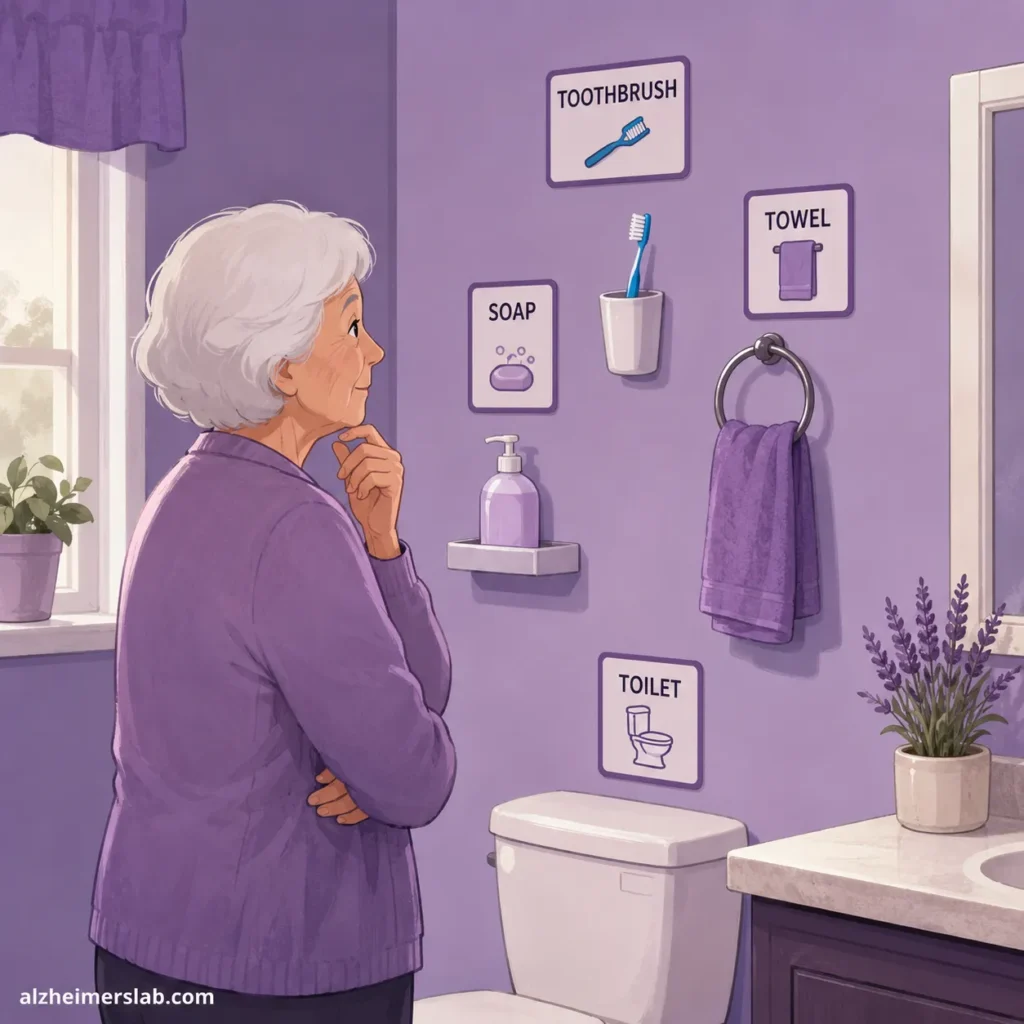
The bathroom is usually the first place I recommend labeling because finding it quickly is important for both comfort and dignity.
Place a large label that says “Bathroom” on the outside of the door. If your loved one responds well to pictures, include a simple photo of a toilet alongside the word. Make sure the label is easy to see from the hallway.
Inside the bathroom, you can also label cabinets that contain frequently used items such as towels, soap, toothpaste, or toilet paper. This reduces unnecessary searching and helps the person complete daily routines with less assistance.
Bedroom
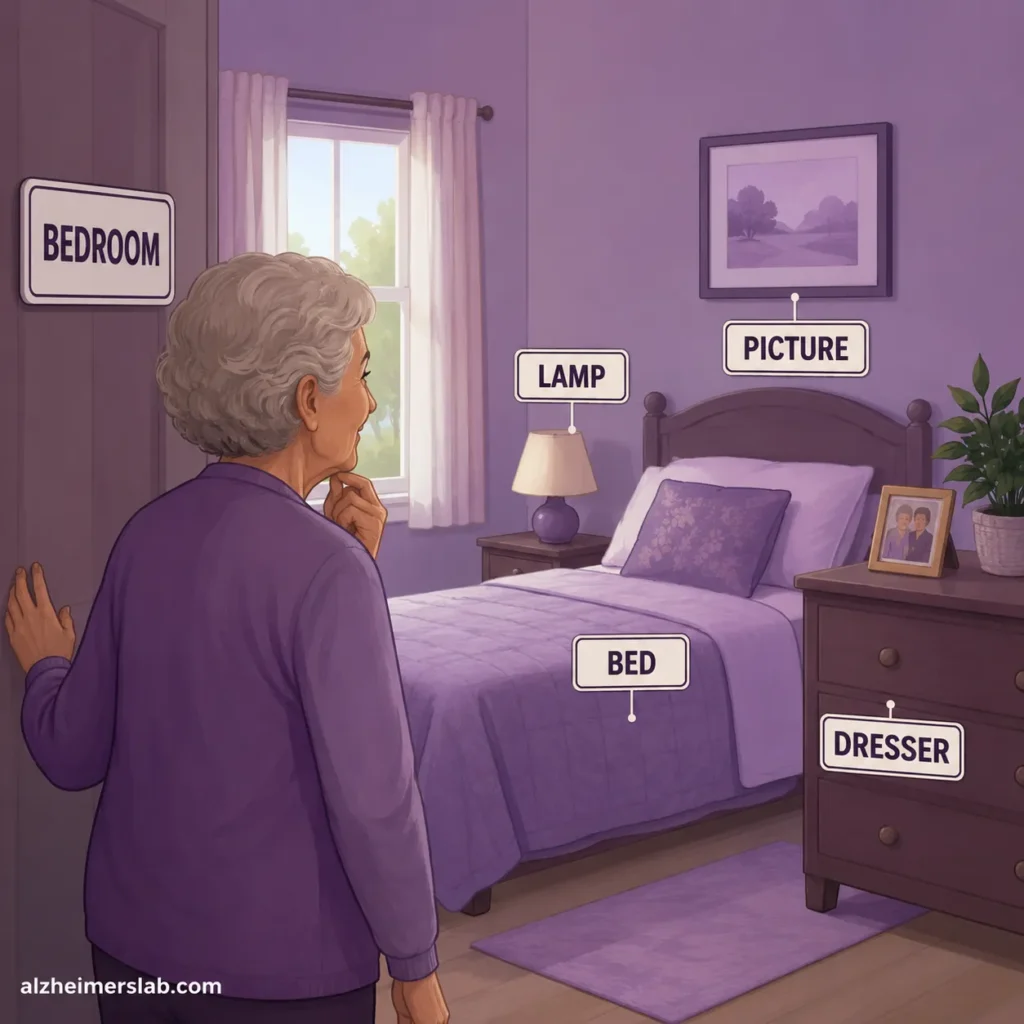
A bedroom should feel familiar and safe. If there are several bedrooms in the home, placing your loved one’s name on their bedroom door can help them recognize their own room.
Closets and dresser drawers are also good candidates for labels. Rather than labeling every single drawer, focus on clothing categories that are used regularly, such as:
- Shirts
- Pants
- Socks
- Underwear
- Pajamas
This makes dressing easier while encouraging independence.
Kitchen
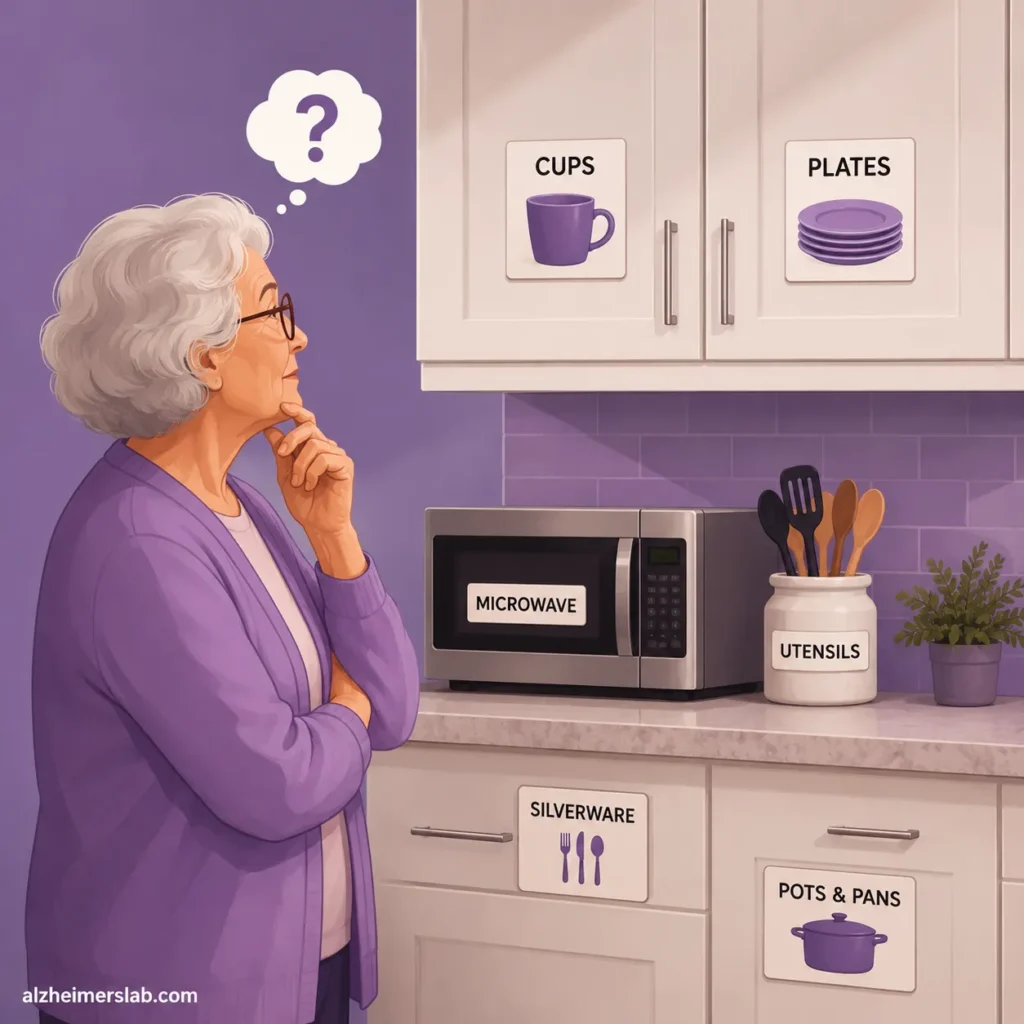
The kitchen often contains dozens of similar-looking cabinets and drawers. Without labels, someone with dementia may need to open several doors before finding what they need.
Start with commonly used items, including:
- Plates
- Bowls
- Cups
- Glasses
- Spoons
- Forks
- Knives
- Coffee
- Tea
- Snacks
Avoid labeling every spice jar or baking ingredient unless those items are used frequently. Too many labels can become distracting rather than helpful.
Medication Area
If medications are stored in one consistent location, a clear label can help identify the area. However, medications should always remain secure and supervised if there is any risk of incorrect use.
The purpose of the label is to reduce confusion, not encourage unsupervised medication management when safety is a concern.
Frequently Used Storage Areas
Think about the questions your loved one asks most often.
“Where are the towels?”
“Where do we keep the blankets?”
“Which drawer has the batteries?”
Those repeated questions usually point to places that would benefit from simple labels.
Rather than labeling based on what you think is important, label the locations that create the most frustration during daily life.
A Room-by-Room Guide to Labeling Your Home
Every home is different, but a consistent approach makes navigation much easier.
Entryway
The entrance is often where people gather the items they need before leaving.
Consider labeling:
- Keys
- Shoes
- Coats
- Umbrellas
- Walking cane or walker storage
Keeping these items in the same location every day is just as important as the labels themselves. Labels work best when routines remain consistent.
Living Room
The living room usually requires fewer labels than other rooms.
Instead of labeling furniture, focus on storage areas if they contain items your loved one uses regularly.
For example:
- Remote controls
- Reading glasses
- Books
- Blankets
If television use has become confusing, placing a simple label such as “TV Remote” near the remote’s storage location can make it easier to find.
Dining Area
Most dining rooms need very little labeling.
If dishes or serving items are stored in nearby cabinets, labels can help identify them. Otherwise, keeping the area uncluttered is usually more beneficial than adding unnecessary signs.
Laundry Room
Laundry rooms can become confusing because many products look similar.
Simple labels like:
- Detergent
- Fabric Softener
- Dirty Clothes
- Clean Clothes
can make household tasks easier, especially during the earlier stages of dementia.
Always store hazardous cleaning products safely, regardless of whether they are labeled.
Garage or Utility Room
These areas often contain potentially dangerous tools and chemicals.
Instead of encouraging exploration with detailed labels, consider labeling only safe storage areas while keeping hazardous items locked away whenever possible.
Sometimes fewer labels are actually safer.
What You Should Avoid
Not every labeling strategy works well for someone living with dementia. In fact, some common mistakes can increase confusion instead of reducing it.
Avoid Too Much Information
A label should communicate one idea quickly.
Instead of writing:
“Kitchen Supplies and Food Storage”
simply write:
“Food”
or
“Plates.”
The brain processes shorter information more easily.
Don’t Use Fancy Fonts
Decorative handwriting may look attractive, but it is harder to read, especially for older adults with vision changes.
Choose clear, bold lettering instead.
Avoid Poor Contrast
Yellow text on a white background or light gray text on beige paper may look modern, but they can be difficult to distinguish.
High contrast improves readability significantly.
Don’t Cover Every Surface
It can be tempting to label everything.
However, when every cabinet, drawer, basket, shelf, and container has a label, the home begins to resemble a workplace rather than a comfortable living space.
Too many visual cues compete for attention.
Instead, prioritize the items that truly matter.
Avoid Moving Items Frequently
Labels lose their usefulness if the contents constantly change.
If the “Plates” cabinet suddenly contains mixing bowls, confusion naturally follows.
Consistency is one of the biggest strengths of a labeling system.
How to Introduce Labels Without Making Someone Feel Embarrassed
Some people welcome labels immediately. Others may feel uncomfortable because they see labels as a reminder that something has changed.
Your approach matters.
Rather than saying,
“I’m labeling everything because you keep forgetting.”
try saying,
“I thought these might make things easier for both of us.”
This small difference keeps the focus on convenience rather than memory loss.
You can also introduce labels gradually.
Start with one or two locations instead of changing the entire house overnight. When labels appear naturally over time, they usually attract less attention.
If your loved one objects to a particular label, don’t force it.
Instead, try another approach later or use a picture instead of text. Dementia care often involves adapting to the individual rather than insisting on one solution.
Remember that preserving dignity is just as important as improving independence.
Do Labels Still Work in Moderate and Late Dementia?
Sometimes.
As dementia progresses, reading ability, language, and visual recognition often decline. Labels may become less effective than they were during the earlier stages.
That does not mean they suddenly stop helping.
Many people continue recognizing familiar words for quite some time. Others benefit more from large photographs than written labels.
Eventually, physical guidance, consistent routines, and caregiver assistance become more important than environmental cues.
Think of labels as one part of a larger dementia-friendly environment.
They work best alongside:
- predictable daily routines
- good lighting
- reduced clutter
- familiar furniture placement
- calm surroundings
- patient communication
No single strategy works forever, but together they can make daily life significantly easier.
Other Visual Cues That Work Alongside Labels
Labels are helpful, but they become even more effective when combined with other visual supports.
For example, leaving the bathroom door open when it is not in use can make it easier to locate than relying on the label alone.
Transparent storage containers also allow your loved one to see what’s inside without opening multiple boxes or drawers.
Color can provide additional guidance as well. A brightly colored toilet seat, contrasting bathroom towels, or colored tape around important switches may make essential items stand out more clearly.
Reducing clutter is equally important. Even the best label can disappear visually if it is surrounded by dozens of unrelated objects.
Finally, maintain familiar layouts whenever possible. Moving furniture or reorganizing cabinets too often forces the person to learn the environment again, which becomes increasingly difficult as dementia progresses.
The less they have to relearn, the more successful your labels will be.
Frequently Asked Questions
Should I Use Words, Pictures, or Both?
For most people with early dementia, simple written words work well because reading skills are often preserved longer than short-term memory. As the condition progresses, adding a clear photograph beside the word usually makes the label easier to understand.
If you’re unsure which approach is best, experiment with one or two labels before changing the entire house. You may find that your loved one naturally responds better to words, pictures, or a combination of both.
When using pictures, choose real photographs whenever possible. A photo of an actual toilet or coffee mug is often easier to recognize than a cartoon icon.
What Is the Best Size for Dementia Labels?
There is no single perfect size, but larger is generally better.
The label should be easy to read from a comfortable distance without requiring the person to move closer or squint. Bold, simple lettering is usually more effective than thin or decorative fonts.
For labels placed on doors, make them large enough to be noticed from the hallway. Smaller labels can work well for drawers and cabinets, provided the text remains easy to read.
Remember that many older adults also have age-related vision changes, so readability should always come first.
Should I Label Every Cabinet and Drawer?
Usually not.
Too many labels can create visual clutter, making it harder to find important information. Instead of labeling everything, focus on the areas that support daily independence.
Ask yourself a simple question:
“Does this location cause confusion?”
If the answer is yes, a label may help.
If the answer is no, it’s often better to leave it alone.
A clean, organized environment with a few well-placed labels is usually far more effective than a house covered with signs.
Can Labels Help Reduce Repeated Questions?
Sometimes, yes.
If your loved one repeatedly asks where certain items are kept, a clear label may allow them to find the answer on their own. This can reduce frustration for both of you and help preserve their confidence.
However, labels are not a cure for memory loss. Someone with dementia may still ask the same question even after looking at the label because the brain has difficulty storing new information.
When that happens, try to respond calmly. The label is there to support them, not to eliminate every challenge.
Will Labels Prevent Wandering?
No.
Labels can help someone recognize familiar rooms inside the home, but they are not designed to prevent wandering or stop someone from leaving the house.
If wandering is becoming a concern, additional safety measures may be needed. These can include door alarms, visual barriers, GPS tracking devices, or increased supervision, depending on the person’s needs.
Think of labels as a navigation aid rather than a safety device.
Can I Make My Own Labels?
Absolutely.
Many caregivers create effective labels using a home printer, a label maker, or even handwritten cards if the writing is large and clear.
The most important features are:
- Large, easy-to-read text
- High color contrast
- Consistent design
- Durable materials
- Simple wording
Professional dementia labels are available to purchase, but homemade versions often work just as well when designed thoughtfully.
My Advice
If I could offer just one piece of advice, it would be this: don’t wait until confusion becomes severe before making your home easier to navigate.
Many caregivers hesitate because they worry that labels will make the home feel clinical or remind their loved one of their diagnosis. In my experience, the opposite is often true when labels are introduced thoughtfully. They quietly become part of the environment and help the person rely on their remaining abilities instead of constantly asking for help.
I also encourage you to think beyond the labels themselves. A well-organized home, consistent daily routines, good lighting, and reduced clutter often have just as much impact. Labels work best when they are part of a larger strategy to support independence.
Finally, remember that dementia changes over time. A labeling system that works wonderfully today may need small adjustments in six months or a year. That’s perfectly normal. Don’t view it as a failure. Instead, treat your home as something that evolves alongside your loved one’s needs.
The goal isn’t to create a perfect system. The goal is to make everyday life a little less confusing, a little less stressful, and a little more comfortable for both of you.
Final Thoughts
Labeling your home may seem like a small change, but it can have a meaningful impact on everyday life for someone living with dementia. When done well, labels provide gentle reminders that make familiar spaces easier to navigate and everyday tasks less overwhelming.
The key is to keep things simple. Use clear words, large lettering, good contrast, and consistent placement. Focus first on the rooms and items that cause the most confusion instead of trying to label everything at once. As your loved one’s needs change, don’t be afraid to adjust your approach.
Most importantly, remember that labels are there to support independence, not replace it. Combined with patience, familiar routines, and a safe home environment, they can help your loved one maintain confidence and dignity for as long as possible.
Sometimes the smallest changes around the house make the biggest difference in helping someone feel secure in a place they call home.
