
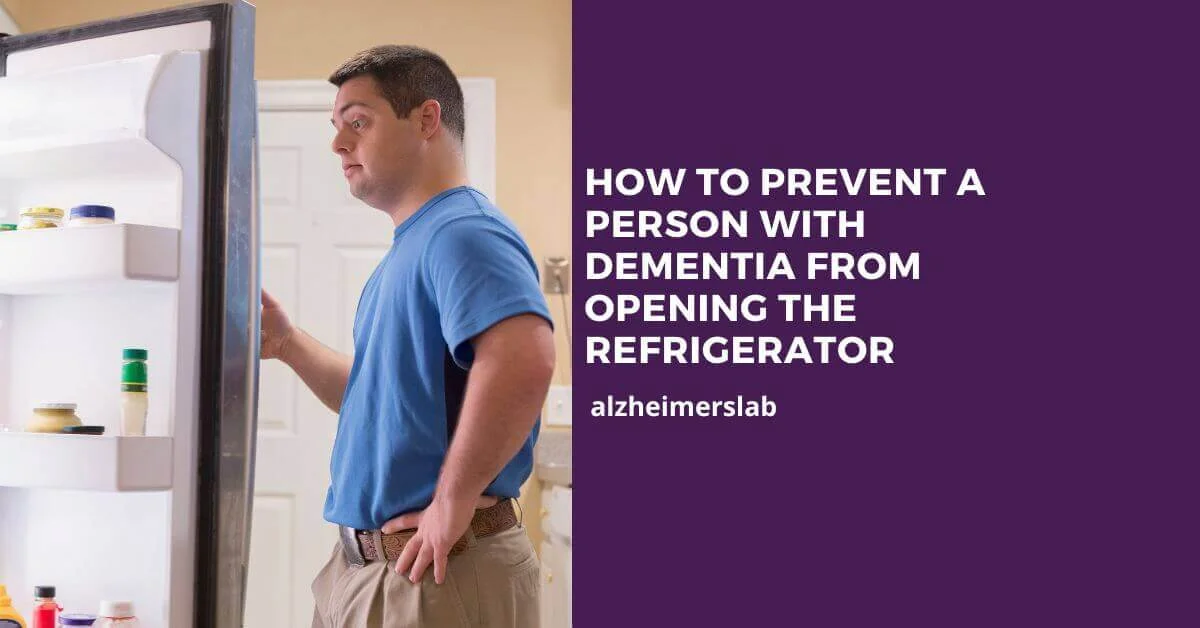
How to Prevent a Person With Dementia From Opening the Refrigerator
It is common for a dementia-affected person to start rummaging around the home. Sometimes they are not sure what specific thing they are looking for.
The National Institute on Aging confirms that rummaging can occur in people with Alzheimer’s disease. A person may rummage through drawers, closets, cabinets, the refrigerator and other places while looking for something, trying to stay occupied or simply because they have forgotten where something is. National Institute on Aging: Understanding How Alzheimer’s Disease Changes People
So do not get mad if you see your loved one searching through the refrigerator.
There are things you can do to prevent them from opening the refrigerator repeatedly or to make the behavior safer. I am assuming that you have installed the refrigerator somewhere in the kitchen.
You can either secure the refrigerator entirely or deter them from going near it. A refrigerator contains essential food items that you might need when hungry. Hence, make sure you have an alternative location where you can store small portions of safe food if you need to limit access to the main refrigerator.
5 Tips To Prevent A Person With Dementia From Opening The Refrigerator
1. Put A Note On It
People with dementia in the early or middle stages can sometimes still read and understand simple instructions. A short note on the refrigerator is therefore worth trying.
You can use a yellow legal pad for this purpose. However, I would not assume that yellow is necessarily soothing to the eye or that it will work better than another color. The important thing is that the message is large, short and easy to understand.
You can write something like:
“Lunch is at 12.”
Or:
“Snacks are in the basket.”
You can also write additional instructions on the note, such as mealtime information.
I am not sure if putting a note can work on a person with severe cognitive impairment. But you can try and see if it works.
More importantly, don’t depend on the note if your loved one repeatedly forgets what it says. Dementia can affect memory, judgment and the ability to follow instructions, so the strategy may need to change as the condition progresses. National Institute on Aging: Understanding How Alzheimer’s Disease Changes People
2. Move The Fridge To Another Room
In some cases, it would benefit to move the fridge to another room such as a pantry or another suitable area. You can also consider placing the fridge in a locked room.
Needless to mention, this could be a major inconvenience for other members of the family. But it could work if you and the dementia-affected person are the only occupants in the house.
However, I would not move the refrigerator simply because your loved one likes opening it.
First, find out why they are doing it.
The Alzheimer’s Society explains that repetitive behavior in dementia can include repeatedly checking the refrigerator to make sure there is enough food. Understanding the reason behind the behavior can help you decide what to do next. Alzheimer’s Society: Repetitive Behaviour
If they are hungry, for example, keeping safe snacks available may work better than trying to physically prevent access to the refrigerator.
3. Get Them A Personal Mini-Fridge
If your loved one is fidgeting with the fridge settings or places strange objects in the main fridge, you might consider getting a mini-fridge for them.
A personal mini-fridge in their room may make them feel special. They may like the fact that they can now keep their favorite refrigerated snacks in their own refrigerator.
However, I would be cautious about this idea if the person has significant cognitive impairment.
Folks in the later stages of dementia might not remember that they have a personal mini-fridge in their room. They may still wander their way to the kitchen.
Here, putting a note such as “Use this one, Grandpa” on the mini-fridge may help if they can still understand written reminders.
Feel free to put their first name on the note. You can also list out the contents of the mini-fridge so they know where their favorite snacks are.
But remember that refrigerated food can spoil. If your loved one cannot reliably recognize spoiled food or manage the refrigerator safely, a mini-fridge may create another safety problem rather than solve the first one.
The National Institute on Aging recommends regularly removing spoiled food from refrigerators and cabinets because people with Alzheimer’s may no longer be able to recognize that food has gone bad. National Institute on Aging: Understanding How Alzheimer’s Disease Changes People
4. Do Not Leave Them Alone At Home If There Are Serious Safety Concerns
I get that you want your loved one to feel independent and self-reliant despite the memory decline. But a point comes when living alone becomes a risk to their safety.
You need to find out if your loved one is engaging in other activities that may turn out to be dangerous.
Is the person leaving the stove on?
Are they eating spoiled food?
Are they getting lost?
Are they forgetting medications?
Are they falling?
Are they leaving doors unlocked?
These questions are more important than the refrigerator issue by itself.
Consider hiring a part-time caregiver if your loved one indulges in potentially hazardous activities. It’s always good to have someone keep an eye on them when you are away at work or school.
The Alzheimer Society of Canada has also published guidance on living safely and independently with dementia, including the importance of considering a person’s changing abilities, home safety and available support. Alzheimer Society of Canada: Living Safely and Independently
5. Put A Lock On It
Locking the refrigerator may seem unkind at first, but there are situations where restricting access may be necessary for safety.
For example, if your loved one repeatedly consumes spoiled food or cannot safely manage access to food, you may need to consider a refrigerator lock or another environmental modification.
You don’t have to chain down the refrigerator. Locks come in several sizes and shapes. Some don’t even appear like a lock.
These locks are often marketed for children, but I would not assume that a child safety lock is automatically appropriate for a person with dementia. The lock needs to be suitable for the refrigerator and should not create another hazard.
More importantly, locking the refrigerator should not mean denying the person adequate food and drinks.
The goal is to prevent unsafe access, not to punish the person or make them feel helpless.
The Alzheimer’s Association recommends looking at the person’s abilities and the specific safety risks in the home rather than applying the same restriction to everyone with dementia. Alzheimer’s Association: Dementia Care Practice Recommendations
What If Your Loved One Keeps Opening The Refrigerator?
This is something I would pay attention to.
If your loved one opens the refrigerator every few minutes, do not assume that they are simply being difficult.
They may be hungry.
They may have forgotten that they already looked inside.
They may be looking for a particular food.
They may be bored.
They may be anxious.
Or they may simply be repeating a familiar activity.
The Alzheimer’s Society notes that repeatedly checking the refrigerator can be part of repetitive behavior in dementia. Looking for the reason behind the behavior can help you decide how to respond. Alzheimer’s Society: Repetitive Behaviour
If hunger appears to be the reason, talk with the person’s healthcare team about an appropriate meal and snack routine.
If boredom seems to be the reason, provide another activity.
If anxiety appears to be involved, reassurance and a calm environment may help.
And if the behavior suddenly becomes much more frequent than usual, it is worth discussing the change with a healthcare professional.
Should You Give Them A Personal Mini-Fridge?
A personal mini-fridge may sound like a clever solution, but I would be careful with this idea.
Someone in the earlier stages of dementia may understand that the small refrigerator belongs to them and may enjoy keeping a few favorite foods inside.
You can even place a simple name label or picture on it.
However, a person in the later stages of dementia may not remember what the mini-fridge is for. They may still walk into the kitchen and open the main refrigerator.
There is also another issue.
A mini-fridge gives the person additional access to food that may spoil if it is not managed properly.
So, before buying one, think about whether your loved one can safely manage refrigerated food. If there is any doubt, discuss the idea with the caregiver team or healthcare professional.
Do Not Leave Them Alone At Home If There Are Serious Safety Concerns
I get that you want your loved one to feel independent and self-reliant despite the memory decline.
But there comes a point when living alone may no longer be safe.
Opening the refrigerator by itself is not necessarily a reason to stop someone from living alone. You need to look at the bigger picture.
Is the person leaving the stove on?
Are they eating spoiled food?
Are they getting lost?
Are they forgetting medications?
Are they falling?
Are they leaving doors unlocked?
Are they having difficulty responding to emergencies?
The Alzheimer Society of Canada recommends looking at a person’s overall safety, support system and ability to manage daily activities when considering whether living alone remains appropriate. Alzheimer Society of Canada: Living Safely and Independently
So don’t make the decision based solely on refrigerator behavior.
Look at the person’s overall ability to stay safe.
What If The Refrigerator Contains Spoiled Food?
This is probably one of the most important refrigerator safety issues for a person with dementia.
A person may open the refrigerator because they are hungry but no longer recognize that certain foods have spoiled.
The National Institute on Aging specifically recommends removing spoiled food from the refrigerator and cabinets for this reason. National Institute on Aging: Understanding How Alzheimer’s Disease Changes People
I would therefore make it a habit to check the refrigerator regularly.
Remove food that has gone bad.
Label leftovers with dates.
Keep foods that need to be eaten soon in an easy-to-see location.
You can also use simple containers and labels to make food easier to identify. The Alzheimer’s Association recommends practical kitchen safety measures, including paying attention to food safety and the person’s changing abilities. Alzheimer’s Association: Home Safety
Summary
Caregivers often find their loved ones with dementia searching for something thoroughly and with disregard for the way in which things were arranged. This kind of rummaging behavior is common among folks with cognitive impairment. They may do it for a variety of reasons, including hunger, boredom, confusion or simply because they have forgotten what they were looking for. National Institute on Aging: Understanding How Alzheimer’s Disease Changes People
In addition to Dementia Proofing Their Room, you also want to safeguard other areas in the home, namely the kitchen.
With the tips I shared in this post, you can make refrigerator access safer and, when necessary, discourage your loved one from repeatedly opening the refrigerator.
I would not start with a lock unless there is a genuine safety concern. In many cases, understanding the reason behind the behavior, keeping safe food available and redirecting the person toward another activity can be a better place to start.
I hope the tips help. Let me know your thoughts by commenting below.
